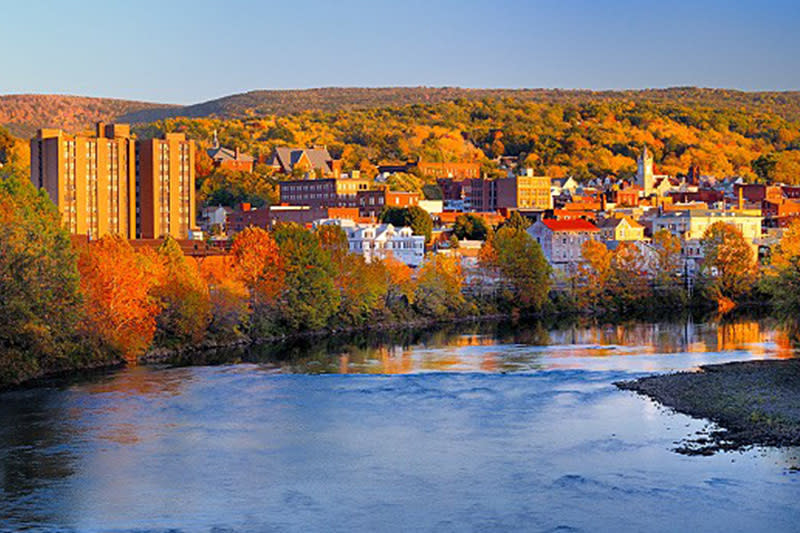
I’ll warn you now—this is a story about a place you’ve never been to and likely never heard of. In fact, that might be its defining trait in the 21st century: a town nobody talks about and few even know exists. And that’s a shame because, in so many ways, it is a quintessential American story.
From its history, sacrifice, and culture to the struggles it faces today, it reflects the broader realities of our country; both good and bad. If more people paid attention to places like this, they might better understand how we got to where we are. But, of course, that would require them to care.
Where am I talking about? Connellsville, Pennsylvania. I know, I know; you’ve never heard of it. It’s a small, continuously shrinking town tucked away in the southwestern corner of the state, home to just a few thousand people. Unless you’re from the region or happen to be a very senior citizen, there’s little reason you’d know its name. So why is a webpage from Louisville, Kentucky, talking about some little town 500 miles away?
For starters, it’s where my story begins. I wasn’t born there, but it’s where my family has its roots. Geographically, my family tree is easy to trace. No matter which branch a genealogist chose to follow, all roads would lead to southwestern Pennsylvania. No matter which city, town, or county you looked at, my family would have ties there. They still do. But that’s not why I hope you care.
I want to tell this story because it’s the story of many towns and cities across this country. Contrary to human nature, history does not begin with our birth. Generations came before us, and the dominoes they toppled years ago still shape our world today. I have learned this because I know Connellsville.
Connellsville traces its history back to the settler and colonial era. And I don’t mean the Revolutionary period; go back several decades to before the French and Indian War. The area was rich in wildlife, attracting both Native Americans and European settlers for fur trapping.
Later, during the French and Indian War, British General Edward Braddock—accompanied by a young aide-de-camp named George Washington—crossed the Youghiogheny River at what is now Connellsville. Unfortunately for Braddock, he was killed not far from there, and his grave lies just down the road. Washington himself learned some hard military lessons in the area and later purchased 1600 acres of land nearby.

After the American Revolution, Connellsville was founded by Zachariah Connell in 1793. The town sits along the Youghiogheny River, always an advantage for transporting goods and trade. It also happened to sit at the heart of what would become the Connellsville Coalfield.
As the Industrial Revolution took hold in the 1800s, Connellsville emerged as a powerhouse in the production of coal, coke—a purified form of coal essential for steelmaking—and iron. Centuries-old iron furnaces can still be found scattered throughout the area.

By the time the 19th century gave way to the 20th, Connellsville played a shockingly vital role in the industrialized world. Thanks to the quantity—and quality—of the coke produced by its coal and thousands of beehive ovens, it earned the title of “Coke Capital of the World.” Without its coke, mass steel production would not have been possible.
Due to its importance, little Connellsville was serviced by five major railroads: the Pennsylvania Railroad (PRR), the Baltimore and Ohio (B&O) Railroad, the Western Maryland Railway (WM), the Pittsburgh and Lake Erie (P&LE) Railroad, and the Norfolk and Western (N&W) Railroad. I suppose it was the least they could do, considering their rails were made possible by the people of Connellsville.

In addition to fueling Henry Clay Frick’s coal and coke empire, Connellsville also played a crucial role in Andrew Carnegie’s steel revolution. At one point, this little speck of Pennsylvania countryside boasted more millionaires per capita than anywhere else on the continent—perhaps even the world. For a region largely composed of German, Polish, Irish, and Italian immigrants, this was quite an achievement.

I grew up hearing stories from the older folks about how, in the old days, the ovens stayed hot, cooking coke to be shipped to the mills in Pittsburgh as quickly as possible. They told me that even in the dead of night, the glow of thousands of coke ovens lit up the sky so brightly that one could work as if it were daytime.
Today, hunting for the remnants of those ovens has become a hobby for some locals, as time, weather, and development have made them harder to find. I have relatives who own property where, if you wander past the tree line in the backyard, you can still find the distinctive stone and brick remains of the ovens.

It was a different era in a unique part of the country. Here in Louisville, we take urban sprawl for granted, thanks to our maze of interstates and relatively flat—if not gently rolling—terrain. But western Pennsylvania is not sprawl-friendly.
The Allegheny Mountains and Laurel Highlands—part of the central Appalachian Mountains—and the accompanying river valleys make large-scale suburban expansion nearly impossible. Instead of vast open spaces ripe for development, communities grew in pockets. Downtown areas formed where they could, with rivers and mountains acting as natural city limits.
Instead of strip malls and Walmart, family-owned businesses flourished. One would find independent drugstores—with a lunch counter and soda fountain, mind you—on the streets, along with local shops that made for a thriving shopping district in “dahntahn.” That’s “downtown” for those unfamiliar with Western Pennsylvania English.

The unique cultural makeup of Connellsville made daily life a reflection of what was great about our country. Perhaps nowhere was this more evident than in its cuisine. The Polish and Slovaks brought their traditional foods to the banks of the Youghiogheny—you can’t throw a chunk of coal without hitting a source of pierogis—just as the Italians, Irish, and Pennsylvania Dutch did. (To be clear, the Pennsylvania Dutch are German; “Dutch” was a centuries-old, archaic way to refer to anything German and may also be an anglicization of the word Deitsch. Somehow, it stuck. Regardless, in Pennsylvania, the “Dutch” are of German ancestry.)

I can’t tell you how many times I’ve been in the Polish, Slovak, Italian, Moose (Lodge 16), or any of the other cultural and civic clubs in town. When I was young, walking through the door of any of these neighborhood clubs with my grandparents always triggered a familiar reaction. The people inside would loudly and warmly greet us, setting off a round of teasing and joking with my brother and me, prodding us kids: “Yah gotta keep an eye on your Pap, cuz he’ll cause all kinds of hell n’at.” They’d give us change to put in the gumball machine. Everywhere we went, the people I met there were as kind and generous as anyone I’ve ever known. That still holds true today.
All of these people lived and worked together, faced hardships together—it was incredibly hard and often dangerous work—and contributed to the unique culture of their western Pennsylvania home. It seemed as if everyone knew each other. Growing up, I was always amazed at how many people had lived their entire lives in the town. They not only knew their neighbors but also everyone in town—and their parents, grandparents, siblings, cousins, extended family, and so on.
My family certainly wasn’t among the previously mentioned millionaires, but they had happy memories of taking the streetcar “dahntahn” during the Christmas season or going to the movie theater with cousins or friends. They were “poor,” but they always had enough to eat, a close-knit community, and cherished memories that lasted a lifetime.

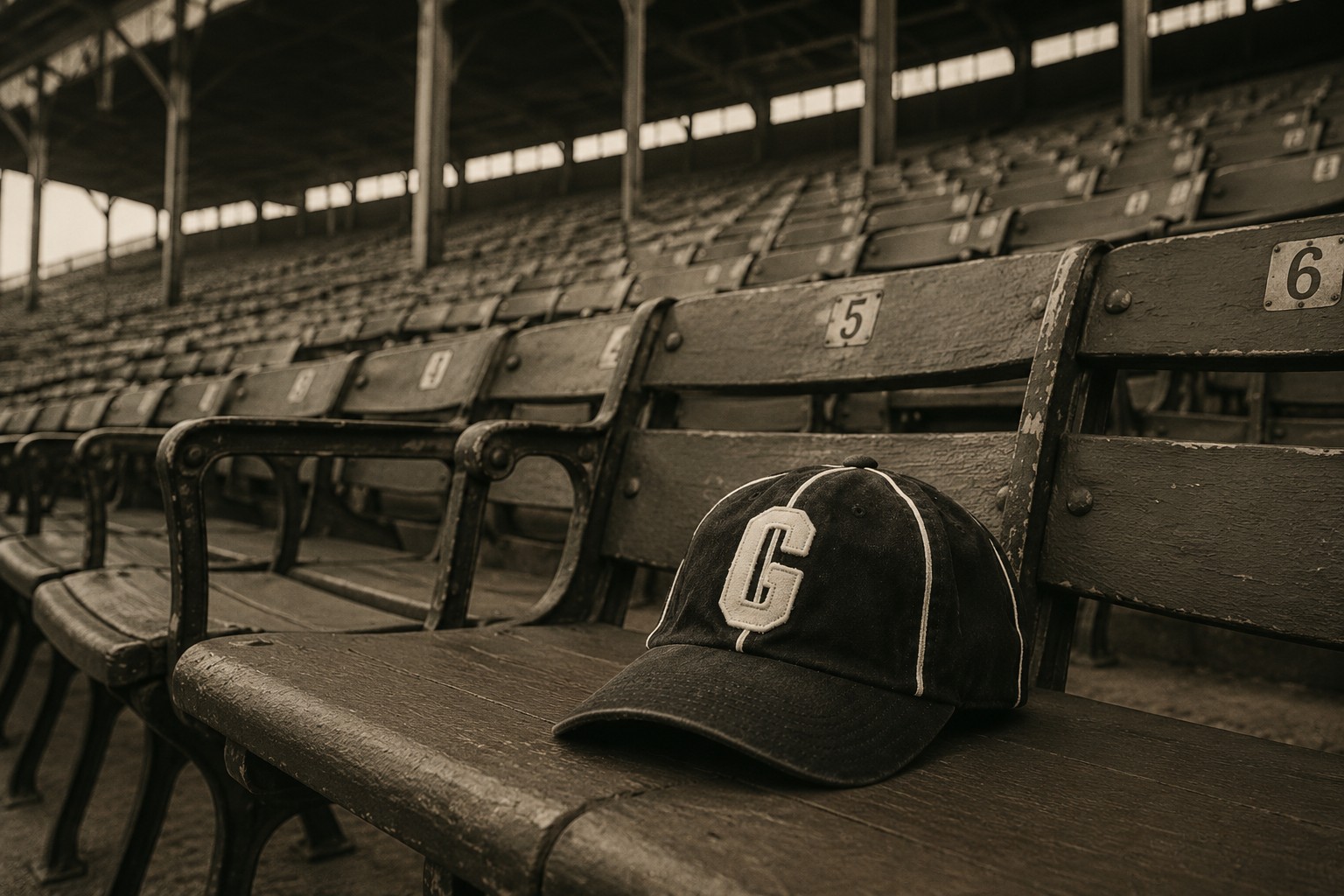
I’ve listened to more stories than I can count—with intense jealousy, I might add—about going into Pittsburgh with an uncle to watch the Pirates at Forbes Field and seeing the “Flying Dutchman” Honus Wagner or “The Great One” Roberto Clemente, depending on the generation. Or about the excitement when Bill Mazeroski stepped up to bat in the bottom of the ninth inning in Game 7 of the 1960 World Series against the vaunted New York Yankees—and belted a home run over the left field wall of Forbes Field to win the series. To this day, it remains the only Game 7 walk-off home run in World Series history.

The residents of Connellsville are proud of their native sons and daughters, and rightfully so. Jazz trombonist Harold Betters, “Mr. Trombone”, hails from Connellsville. Johnny Lujack was born and raised there before going on to win the Heisman Trophy at Notre Dame—playing both quarterback and safety—and three National Championships before becoming a first-team All-Pro for the Chicago Bears.
Most people know of Jesse Owens, and for good reason. Owens was an American track star—a black American track star—who won gold at the 1936 Olympics, the so-called “Nazi Olympics,” with Hitler watching from the stands. But have you heard of John Woodruff? A Connellsville native, Woodruff shared the same story, winning gold in the 800 meters at those same Olympic Games and helping to publicly shatter Hitler’s master race showcase.

Major League ballplayers, politicians, titans of business and industry, actors, artists, and musicians have all staked their claim as Connellsville’s favorite son or daughter over the decades.
Connellsville had built quite a history of overcoming challenges. At times, it was about much more than just winning in the arena of sport. Sometimes, great catastrophes threatened the United States, and not all of its native sons or daughters had a Heisman Trophy or Olympic medal waiting for them when the job was done.
Like the rest of the country, Connellsville endured two world wars. But they didn’t just endure them—they were at the center of an industrial effort that helped push the Allies forward. This small town saw hundreds of its men lose their lives in wars abroad.

But others returned. My great-grandfather came home from World War I with a medal—and a wound—that stayed with him for the rest of his life. I remember him as a quiet man, never cruel or frustrated.
When the next great war, World War II, arrived, my grandparents’ generation answered the call to duty—whether in uniform, in the local mines, at the coke ovens, in factories, machine shops, and plants, or on the railroads. The men and women of Connellsville, both at home and abroad, had an outsized impact on the war machine—the Arsenal of Democracy—feeding coal, coke, and steel into the production of ships, tanks, cannons, and countless other necessities for the United States and its allies.

Hundreds of residents volunteered at the canteen in the B&O station in Connellsville, where over 600,000 troops passed through on their way to fight the Axis, thanks to the town’s convergence of five railroads. By coincidence, General George C. Marshall—Chief of Staff of the U.S. Army in World War II and later Secretary of State responsible for the “Marshall Plan”—hailed from Uniontown, or as the locals say, “Uniontahn, next tahn over.”
They accomplished all this—and more—without ever having a population of more than about 13,000 at its peak. Despite hardships and challenges, Connellsville was uniquely American. It boasted both beautiful Victorian homes and cutting-edge transportation networks. The stunning Laurel Highlands scenery stood in contrast to its industrial heart. A patchwork of ethnic communities wove together a cultural tapestry that could only exist in the United States.
The men and women who served in uniform, worked the mines, ran the rail yards, labored in the factories, and fired the coke ovens mingled as neighbors—at their local bars, on the streetcars, at their churches, in the shopping districts, and when cheering for the Pirates or their own Connellsville teams.

I wish I could say that’s where the story ends. I really do.
After World War II, things began to change. It was the dawn of the American century. Victory brought possibilities unimaginable just a decade before. But victory also brought something else.
In some respects, the people of the region did too good of a job. Take, for example, the Pennsylvania Railroad. It had been an artery for industry and commerce in the region and was the largest railroad in the country. During the war, it delivered so many trainloads of men and materials so efficiently that the entire system was left worn out. Its tracks, locomotives, and rolling stock were in dire need of replacement and repair.
But now that Washington no longer needed it—and with massive government investment in the Interstate Highway System already on the drawing board—the PRR was left to fend for itself. That didn’t happen, and in 1946—the very next year—the PRR reported its first financial loss in its 100-year history.
By 1968, the Pennsylvania Railroad—the world’s largest railroad and transportation enterprise—ceased to exist in name. The tracks it laid—including some remarkable feats of engineering—now form parts of the Norfolk Southern and CSX rail systems.
Reliance on coal and coke in industry also began to decline. The steel industry was increasingly outsourced to Asia, weakening the domestic steel manufacturing sector and further disrupting the supply chain, where Connellsville had once been the heart.
If one were to walk the rail lines of Connellsville today—CSX still operates a rail yard in town that services its own trains, Amtrak, the Wheeling and Lake Erie (W&LE), and the Southwest Pennsylvania Railroad (SWP)—they would find tracks marked with foreign import labels.

The local Anchor Hocking Glass plant remained a major source of good employment in town. As a boy, I heard countless stories about the region’s heyday and listened in awe. Even then, I could tell it was no longer the same, but most people in town seemed to be doing fine. The older generations had solid pensions to support them, while many of the younger ones worked at Anchor Hocking or commuted “up the mahntahn”—the mountain—to Latrobe.
On our drives to Pittsburgh, emerging from the Fort Pitt Tunnel on our way to Three Rivers Stadium to watch a Pirates game—Forbes Field’s “House of Thrills” was long gone, as is Three Rivers Stadium today—I would stare at the idled steel mills. Even empty and decaying, they were unimaginably massive, imposing structures. All of those old stories have to be true, I would think to myself.

Which brings us to today.
I’m just old enough to have a connection with those older generations and their stories, yet too young to have seen any of it firsthand. The closest I ever got was seeing the evidence—the physical remains and ruins—of that world. What I have seen, firsthand over the course of my life, is the worsening predicament of the people of Connellsville.
Employment—what little remains—is now almost entirely in retail and the service sector, and that reality is reflected in the income statistics: household income hovers around $20,000 per year, while per capita income stands at just $14,000. Nearly half of the town’s youth (18 and under) live below the poverty line, as does nearly a third of the population overall.
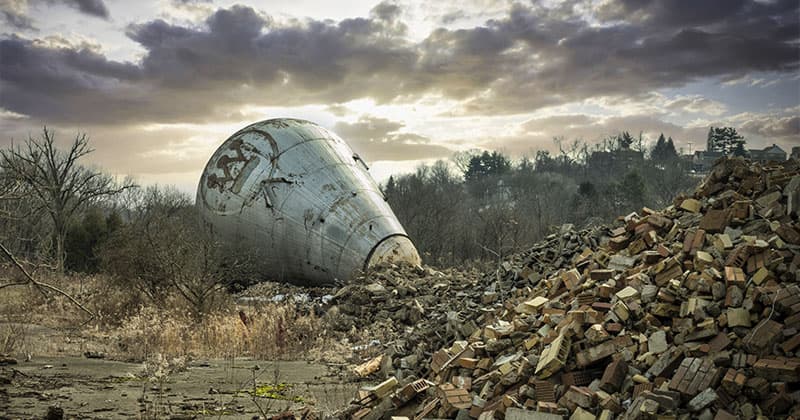
The former Anchor Hocking plant shut down in 2004 and no longer exists; its demolition was completed a few years ago. As the 21st century arrived, the once-beautiful Victorian homes were abandoned. Now, they have either long since been demolished or are well on their way to being condemned. Even the stories are disappearing, as the generations who lived those better days have passed away.

In place of meaningful employment and community has come poverty and addiction. Industry, manufacturing, and a thriving local business sector were wiped out, replaced by a void of hopelessness. These are the people whom politicians have told to learn to code. Beyond the dismissive flippancy of that statement, where exactly would the people of Connellsville even go to acquire that skill? There is no institution in the region that offers such training. In fact, their only local college, Penn State-Fayette, is on the verge of closing its campus entirely. And even if some miracle allowed people to learn coding overnight, where in the area would they even apply it?
Lacking a post-secondary education system or an employment environment that prioritizes opportunity and commerce, Connellsville instead finds itself with an abundance of something else: pills, meth, and fentanyl. What the town lacks in opportunity, it more than makes up for in addictive substances.

If you’ve made it this far, I bet you know of a place just like this. Maybe it doesn’t have the same background, history, or story, but you avoid going there because of the poverty, homelessness, and panhandling. Maybe it’s a place where your kids point at an addict behaving erratically and ask, “Why is he acting that way?” Or maybe you just don’t like the graffiti. If you have ties to the Midwest, I know this is familiar, because we have an entire region with an incredibly similar story: the Rust Belt.
And it’s a damn shame. These are complex issues, with countless moving parts and variables that contribute to them. Economics and technologies change. That has always been true and always will be. It’s one thing if a community failed in the marketplace because it didn’t produce. It’s quite another when a community is thrown under the bus, and the middle-aged family breadwinner—freshly laid off—gets a condescending slap on the back and a “just go try some computers.”
Connellsville has attempted to capitalize on its history with tourism and recreational offerings as part of the Great Allegheny Passage. It’s certainly better than nothing, but it’s nowhere near a game-changer. Sadly, I think Connellsville is so desperate that it keeps looking for a leader with a magic wand, and that isn’t going to happen.
There are many people trying to do what they can with what they have—I’ve met some of them—and we should be thankful for their efforts. But the pessimist in me doesn’t believe that fixing mountain bike tires and serving vitamin-infused smoothies is going to bring economic prosperity to Connellsville—or to any of the hundreds of towns like it.

Believe it or not, the point of this isn’t some romantic longing for the “good ol’ days.” First of all, I never saw them. Secondly, I’m acutely aware of the ever-changing economic landscape. The point is that it’s long past time people acknowledged the communities, right here in the United States, that have endured a miserable existence for decades.
Poverty and lack of opportunity exist. Fortunately, discussions about struggling communities are becoming more common. But how often do you hear about Appalachia when these issues come up? In my memory, it has only happened when these areas suddenly became political battlegrounds in recent presidential elections—for the first time in decades.
I—and more importantly, the people of Connellsville—am still waiting for the results of the patronizing promises made by politicians over the past decade-plus.

So that’s my story. I hoped it would be a story that epitomized the American Dream—a rags-to-riches tale of community, patriotism, and prosperity to be emulated. Unfortunately, I don’t have a happy ending for you. At least, not yet. I’d like to believe this can still be a great American redemption story. But if history is any indication, I may be left with nothing more than the stories I was told as a child.



Leave a Reply