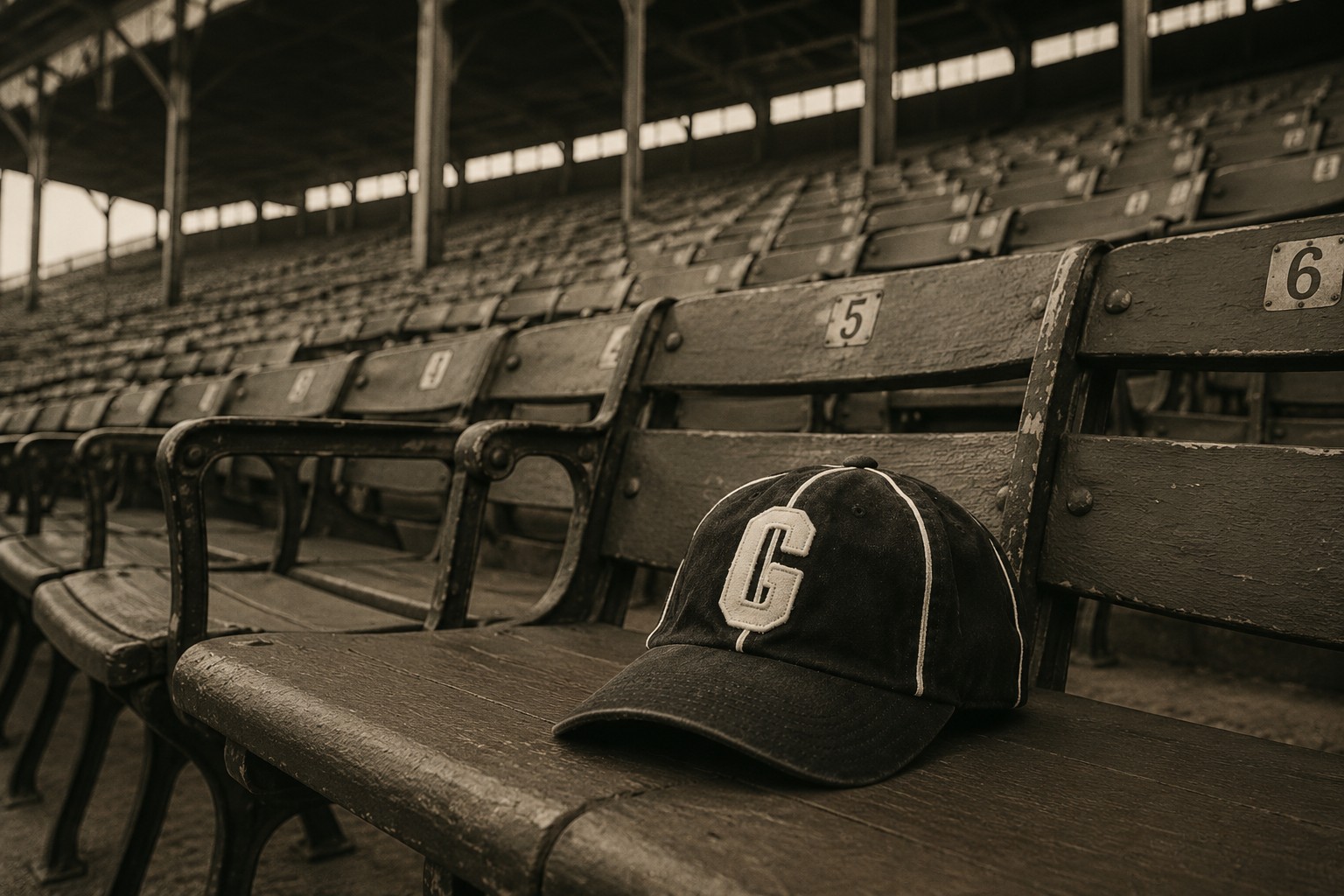
On a summer afternoon in 1943, Griffith Stadium in Washington, D.C. filled with more paying customers than the ballpark’s regular tenant could draw on most days that season. The Washington Senators were on the road. The team on the field belonged to someone else.
On this day, the Homestead Grays were taking batting practice four hundred miles from the mill town that gave them their name, playing in a ballpark borrowed from a team that wouldn’t have let them sit in the stands as equals.
Buck Leonard dug into the batter’s box. Josh Gibson crouched behind the plate. The crowd noise built the way it always did when the Grays were in town, and by the account of more than one sportswriter who covered both clubs, it built louder than it did for the Major League-affiliated Senators.
Clark Griffith, the Senators’ owner, watched his rented-out ballpark generate more excitement in his absence than his own team managed in his presence. He knew what he was looking at: a catcher good enough to play in the American League, a first baseman good enough to anchor it, an entire roster capable of competing with anything the majors could put on a diamond, and a color line standing between all of it and his own lineup card.
He also understood something else. As long as that line held, he had a tenant. A profitable one. One that filled his stadium on nights his own team couldn’t, and paid him rent to do it.
This is the story of the Homestead Grays: a franchise built by black steelworkers out of a Pittsburgh mill, turned into a dynasty by one of the shrewdest owners in the game’s history, and eventually undone by the correction of the injustice that had helped make it possible in the first place.
The men who built black baseball into a business worth protecting had reasons of their own to want the game to stay exactly as unfair as it was. And when America finally began to make it fair, what they built didn’t survive the transition.
It started decades earlier, on the other side of the Allegheny Mountains, in a mill town still working through the wreckage of a different fight.

Homestead, 1900
Eight years before the Grays existed in any recognizable form, the same stretch of riverbank had already made itself famous for a different kind of confrontation.
In 1892, Carnegie Steel broke the Amalgamated Association of Iron and Steel Workers at its Homestead plant, using armed Pinkerton agents widely enough that state militia had to intervene. The union lost. Organized labor in the American steel industry didn’t recover its footing there for decades.
In the years after, mill owners went looking for a workforce less likely to organize against them, and they found part of it in the rural South.
Black workers arrived in Homestead in growing numbers through the 1890s and into the new century, recruited in part because employers understood the labor movement had not yet made inroads with them, and in part because the postwar South offered little beyond the promise these mills could match.
The welcome they found in Homestead was cold. White workers, many of them recent immigrants themselves, treated the new arrivals with the same suspicion the mill owners had counted on.
A baseball team started forming among those black steelworkers around 1900. They called themselves the Blue Ribbons, an amateur nine that barnstormed the sandlots of the Monongahela Valley, taking on any team willing to play them.
In 1910, with the original organizers moving on, the players reorganized as the Murdock Grays. Two years later, the club became the Homestead Grays, and that name became legendary, outlasting every other detail of the transformation that produced it.
The man behind that transformation had not grown up needing a mill job to survive.
Cumberland Posey Jr. was born in 1890 into a level of black wealth rare anywhere in the country, let alone in a smokestack town on the Monongahela.
His father, Cumberland Posey Sr., had been born into slavery and became the first licensed black riverboat engineer in the United States before turning his attention to real estate and building one of the largest personal fortunes held by a black Pittsburgher of his generation.
His mother, Anna Sr., was the first black woman to graduate from Ohio State University, and later returned to teach there.
Posey grew up with an athletic career other men would have envied on its own: prep basketball good enough to be called the outstanding athlete of his race, university stops at Penn State, the University of Pittsburgh, and Duquesne, and a semi-professional basketball career that would eventually land him in the Naismith Memorial Basketball Hall of Fame.
Posey joined the Grays as a player in 1911, taking a spot in center field for a team he had no financial need to join.
What he brought instead was a plan. Within a year, he had pushed the club’s rebrand from the Murdock Grays into the Homestead Grays, and by his mid-twenties he had worked his way from player to team captain to manager, learning every operational lever the club had before he ever owned it.
The results came fast. The Grays won forty-two straight games in 1913, a stretch that turned a sandlot curiosity into a regional attraction. Sunday games became the event of the week in Homestead’s black community, drawing crowds that had little else built specifically for them in a town still sorting out where they belonged.
By the early 1920s, Posey had bought the team.
He ran it the way he’d learned to run everything else. He was personally involved, and didn’t have much patience for being told no. He booked the opponents, arranged the travel, and picked the stadiums, and he built a franchise that would soon need all three done at a scale no sandlot team had ever required.
The Grays of the 1920s were not the dynasty they would become. But the machinery for building one was already in Posey’s hands, assembled by a man whose own family had spent two generations proving that black success and black wealth were more than aberrations to be explained away, even if most of white Pittsburgh preferred not to look.

Building the Dynasty
Posey ran the Grays with an owner’s temperament from the start. He was demanding, and unwilling to accept a roster that was good when a better one could be assembled.
Forbes Field gave him the stage to do it on. The Pittsburgh Pirates’ home ballpark, one of the finest in the country, hosted the Grays whenever the Pirates were traveling, and the arrangement put black baseball’s best team in front of a major league facility, a paying Pittsburgh audience, and a level of visibility few Negro League clubs anywhere could match.
Posey used it well. The Grays won forty-six straight games in 1926. They went 136-17 in 1931, a season SABR would later argue produced the greatest black baseball team ever assembled, built around Josh Gibson, Oscar Charleston, and Smokey Joe Williams, an ace who once struck out twenty-seven Kansas City Monarchs in an incredible twelve-inning outing.
None of it happened by accident. Posey scouted relentlessly, paid competitively for a league that rarely could, and treated the Grays like the professional operation he intended it to be, than as a sandlot outfit that had gotten lucky.
The player who would define the franchise arrived by accident anyway.
Josh Gibson’s family had come north from Buena Vista, Georgia, part of the same migration that filled Homestead’s mills with black labor a generation earlier.
His father found work at one of Andrew Carnegie’s steel plants, and Gibson grew up in Pittsburgh’s Hill District, a teenager with a reputation on the sandlots that had already reached the city’s semi-pro circuit before he ever played a professional inning.
On July 25, 1930, that reputation got tested. Grays catcher Buck Ewing injured his hand mid-game, and the team, needing a replacement on short notice, pulled eighteen-year-old Gibson out of the stands and put him behind the plate.
He never really left. Gibson hit an absurd .461 in what amounted to his rookie season, and the power that would make him a legend showed up almost immediately.
He hit a ball out of Forbes Field before he turned nineteen, a stadium not known for rewarding hitters that way, and in a game at Yankee Stadium he drove one into the left field bullpen on a line long enough that fans debated it for years as one of the longest home runs the ballpark had ever seen.
Posey had his cornerstone. Buck Leonard, a first baseman with a swing built for consistency rather than spectacle, joined not long after, and the two became the Grays’ offensive foundation for the next decade and a half.
By the early 1930s, the pieces were in place for a dynasty: an owner who understood the business of black baseball as well as anyone in the country, a home ballpark that put his team in front of the audience it deserved, and a lineup anchored by a catcher who hit like no one else in the league.
What the Grays didn’t yet have was security. The Depression was about to test Posey’s operation in ways that winning percentages couldn’t fix, and across town, a nightclub owner with deep pockets and no interest in losing to Cumberland Posey was already circling his best players.

The Raiding War
Gus Greenlee came up through the numbers, not baseball.
By the late 1920s, Greenlee had built one of the largest illegal lottery operations in the Hill District, the kind of business that ran on cash and a network of runners who knew every block in black Pittsburgh.
He owned the Crawford Grill, a nightclub that doubled as his headquarters, and he had the kind of money Posey’s respectable operation couldn’t match dollar for dollar.
In 1930, Greenlee took over a Hill District sandlot team called the Pittsburgh Crawfords, and he made it clear that he intended to build something that could beat the Grays at their own game.
The Depression made his timing brutal for Posey. The Grays’ finances tightened along with everyone else’s in the early 1930s, and Greenlee moved on the openings it created. He lured Josh Gibson away first, then added third baseman Judy Johnson and first baseman Oscar Charleston, both pulled right off Posey’s roster.
He signed Cool Papa Bell, a Mississippi-born outfielder considered by many the fastest man ever to play the game, and he brought in a lanky right-hander named Leroy “Satchel” Paige, whose arm alone was worth the price of admission at any ballpark in the country.
All five men would end up in the Hall of Fame. Hall of Famer Monte Irvin later called the result black baseball’s answer to the 1927 Yankees, a team built to be not just good, but historically dominant.
Greenlee backed the roster with real infrastructure. He built Greenlee Field on Bedford Avenue in the Hill, the finest black-owned ballpark in the country, and he resurrected the collapsed Negro National League, running its offices out of space above the Crawford Grill.

For a few years, the balance of power in black Pittsburgh baseball tilted decisively toward the numbers man rather than the steelworker’s son.
The balance shifted back fast. In the spring of 1937, while the Crawfords trained in New Orleans, an emissary of Dominican dictator Rafael Trujillo arrived with an offer Satchel Paige couldn’t turn down: more money than even Greenlee was paying, in exchange for Paige jumping to Ciudad Trujillo’s team for the season.
Paige took it. Gibson, Bell, and half a dozen other Crawfords followed him to the Dominican Republic within weeks. Ciudad Trujillo won that summer’s tournament behind the imported talent, but the Crawfords collapsed into the league’s second division without them, and Greenlee gave up the franchise a year later. Greenlee Field came down not long after, replaced by public housing.
Gibson came home. He rejoined the Grays in 1937, reunited with Buck Leonard at first base, and the pairing that sportswriters would nickname the Thunder Twins began a run that neither the Depression nor the Crawfords had managed to stop.
The Grays won the Negro National League pennant every year from 1937 through 1945, nine consecutive titles that no other franchise in American professional sports has matched before or since.
The raiding war had cost Posey his best player for the better part of five seasons. It cost Greenlee his entire franchise. What it left behind, once the dust settled, was a Homestead Grays roster stronger than it had been before the fight started, facing a rival that had already been dismantled by its own success.

The Washington Arrangement
By the late 1930s, Posey had a problem that winning alone couldn’t solve. The Grays were the best team in black baseball, but Pittsburgh’s market could only support so many paying crowds in a season, and Forbes Field, however prestigious a home, wasn’t generating the kind of revenue a nine-time pennant winner needed to sustain itself.
Posey needed a bigger stage.
Clark Griffith had a different problem. His Washington Senators had been mediocre for years, drawing small crowds to Griffith Stadium even in a city with no other major league team to compete with. An empty ballpark on a summer weekend was money Griffith wasn’t making, and he knew exactly what kind of team could fill the seats his own club couldn’t.
The two men found each other. In February 1940, Posey and his business partner Rufus “Sonnyman” Jackson announced that the Grays would begin playing a share of their home games at Griffith Stadium, splitting the schedule with Forbes Field and a smaller park in suburban Munhall.
The Grays didn’t leave Pittsburgh. They added Washington on top of it, playing three games a week in the capital by the early 1940s and drawing crowds that, by multiple sportswriters’ accounts, regularly outnumbered what the Senators brought in.
The arrangement worked for both sides. Griffith collected rent on a stadium that would have otherwise sat empty while his team was on the road, and he collected it from a black-owned franchise that needed exactly what he had to offer: a big-city market, a first-rate facility, and a fan base hungry for a team worth watching.
Posey got the audience, the gate receipts, and the national visibility that came with playing regularly in the nation’s capital. By 1943, the Grays were playing more than two-thirds of their home schedule in Washington, and black baseball, for the first time in its history, was making real money.
Griffith had another asset sitting in front of him that he chose not to touch. He reportedly considered signing Josh Gibson to the Senators, a move that would have integrated the American League years before Jackie Robinson ever put on a Brooklyn uniform, and years before Branch Rickey gets credited with the idea.
Griffith decided against it. The official reasoning, as it circulated at the time, was that the country wasn’t ready and that baseball wasn’t the place to force the integration issue. The unofficial reasoning may have had more to do with his bank account than his conscience.
A segregated game meant Griffith kept collecting rent from the Grays every summer. An integrated one meant Gibson would end up on his own roster, or worse, on someone else’s, and either way Griffith would lose the tenant that had been propping up his stadium’s finances for years.
Ironically, he had built a profitable arrangement out of the status quo that kept his own team from getting better, and he wasn’t in a hurry to tear it down.
Posey had reasons of his own to feel the same pull, even if his sat on the other side of the same coin. What kept Griffith’s stadium filled also kept Posey’s franchise necessary. The two men had built a partnership that depended, in ways neither of them needed to say out loud, on the color line holding exactly where it was.

The Uncomfortable Center
The Griffith arrangement wasn’t an isolated case of one man’s convenient blindness. It was the whole system working exactly as its architects, black and white, had built it to work.
Historian Rob Ruck, writing for the Society for American Baseball Research, explained the point: Negro League baseball grew into the third-largest black-owned business in the country, trailing only the black insurance industry and the numbers racket that had funded Greenlee’s Crawfords, and it did so partly because of segregation, not only in spite of it.
Posey and Greenlee built something real and valuable inside a system designed to exclude them from anything else, and the value of what they built was tied directly to the line that kept it separate. Erase the line, and the value went with it.
Posey understood this earlier than almost anyone else in the game. He’d spent twenty-five years turning a sandlot team into the most successful franchise black baseball had ever produced, and he knew exactly what he stood to lose the moment the major leagues started signing his players without paying him for the privilege.
In October 1945, when Branch Rickey signed Jackie Robinson to a contract without so much as a phone call to the Kansas City Monarchs, the team Robinson was leaving, Posey saw the pattern for what it was.

Major league teams treated Negro League rosters as a free agent pool, there for the taking, and Posey said so in terms that left nothing to interpretation: it was like a man walking into another man’s store and stealing the merchandise right off the shelves.
That complaint wasn’t the objection of a man defending segregation. It was the objection of a businessman watching his labor force get poached without compensation, by an industry that had spent decades refusing to compete for that same labor on equal terms and now wanted it for free the moment doing so became profitable.
Posey had built the Grays into a franchise capable of nine straight pennants, developed the talent the majors now wanted, and stood to be handed nothing for any of it.
He died in March 1946, a year before the pattern began to play out in full. What he’d already seen coming was enough to make him say it.
None of this means Posey wanted the color line to hold forever, and it would be a mistake to read his frustration that way. He wanted fair terms, not permanent exclusion, and those are different things even when they sit close together on the page.
But fair terms were never on offer. The majors got to decide when integration happened, on whose schedule, and at what price to the institutions that had spent half a century developing the players involved.
For the record, that price was $0. No compensation, transfer, or contract buyout was ever paid to Negro League teams for players that were signed by Major League teams
Posey, Griffith, and every other man running black baseball in the 1940s operated inside a system that made honesty about that trade-off almost impossible, because saying it openly meant admitting a personal stake in an injustice everyone involved would have publicly condemned if asked.
There’s a version of this story that stops here, content to note the irony and move on: the men who built black baseball, and the white men who profited from renting it stadium space, both had reasons to want segregation to last exactly as long as it did.
That version isn’t wrong, but it’s incomplete. What Posey and Griffith stood to lose wasn’t the same as what everyone else stood to lose, and simplifying those two things into one convenient irony reduces a loss that deserved better than a reduction.
Griffith stood to lose rental income. Posey stood to lose money too, but he also stood to lose the one institution in American professional sports that black communities had built, owned, and run on their own terms, answering to no commissioner’s office and no owner who saw them as anything less than the whole point of the operation.
That’s an important difference. A business calculation and the loss of a self-governing institution are not the same kind of cost, even when they show up in the same issue, and the story of the Grays only makes sense if both are held onto at once.
Posey wanted the money the Grays had earned and the franchise that had made his name. He never wanted the underlying system that made both possible to survive him.
He simply understood, better than almost anyone watching, that when that system finally ended, it would take the Grays down with it, and there would be no negotiating the terms of how.

Gibson’s Decline
Gibson kept hitting through all of it. Through the raiding war, through the war years, through whatever was happening inside his own body that he chose not to talk about, he kept showing up and kept producing some of the best offensive numbers baseball, black or otherwise, had ever seen.
The 1943 and 1944 seasons brought back-to-back Negro World Series titles. The 1945 pennant made it nine championships in a row. By every visible measure, Gibson was at the peak of a career that had already made him a legend.
The visible measure missed what was happening underneath.
Gibson had been dealing with serious health problems since at least the early 1940s, and by mid-decade those closest to him understood the situation was worse than the box scores suggested.
He suffered from severe headaches and periods of confusion that teammates noticed but rarely discussed, the kind of symptoms consistent with a brain tumor, though the full diagnosis was never confirmed through surgery.
Doctors reportedly recommended an operation. Gibson refused it, reportedly out of fear that surgery might kill him or leave him permanently unable to play, and he kept catching instead, doubling down on the one thing he knew how to do while whatever was wrong with him went untreated.
He also carried other burdens by then: money troubles despite being the highest-paid player in the Negro Leagues at roughly $6,000 a year, personal losses that friends said hit him hard, and a level of public fame that came with none of the compensation a white player of comparable talent would have commanded from the major leagues.
Gibson understood his own value.
Baseball Reference would later credit him with a .373 career batting average and 176 home runs in official Negro League play, numbers that stood alongside anything the major leagues had produced in the same era, and he’d spent his entire career hearing himself compared to Babe Ruth by sportswriters who then went home to cover a major league season he wasn’t allowed to play in.
Cumberland Posey died in March 1946, the man who had built the franchise Gibson anchored and had spent his last public years warning that integration, however overdue, would come at a price nobody in black baseball had been prepared for.
Gibson played on through the 1946 season, his final year with the Grays, still producing at a level few catchers in the league could match even as his health continued to decline.
On January 20, 1947, at his home in Pittsburgh, Gibson suffered a stroke and died. He was thirty-five years old.
Jackie Robinson made his major league debut on April 15, 1947. Robinson had signed with the Dodgers organization back in October 1945, and by the time he took the field in Brooklyn, Gibson had already been dead for eighty-five days.
Whether Gibson’s health would have allowed him to seize the opportunity Robinson got is a question nobody can answer with any certainty. That he deserved the chance to try is not a question at all.
Gibson was inducted into the National Baseball Hall of Fame in 1972, twenty-five years after his death, the second Negro League player honored after Satchel Paige. The recognition came exactly as late as everything else in his career had, arriving only once the institution that had kept him out for two decades finally decided to look back and account for what it had missed.

Integration and Collapse
Robinson’s rookie season was a triumph by every standard that mattered to the country watching it. It was also, almost immediately, a catastrophe for the institution that had spent decades preparing players like him for exactly that moment.
Black fans across the country turned their attention to Brooklyn in 1947, filling Ebbets Field and following Dodgers road games with an intensity Negro League attendance had never generated even in its best years.
The mainstream press covered Robinson’s every at-bat in a way it had never bothered to cover Gibson’s. Negro League executive Frank Forbes admitted the industry expected some falloff in attendance that season. What actually happened caught even the people running the leagues off guard.
Buck Leonard, Gibson’s old partner with the Thunder Twins, put it in six words years later that needed nothing added to them: after Jackie, they couldn’t draw flies.
The Grays kept playing anyway, because that was the only thing left to do. In 1948, with Posey gone and Gibson gone, the team won the Negro National League pennant one more time and beat the Birmingham Black Barons in the last Negro World Series ever played.
It was a fitting cap to the most successful run any Negro League franchise had ever produced, and it happened in front of crowds a fraction of the size the Grays had drawn at Forbes Field and Griffith Stadium just a few years earlier.
The Negro National League folded that same season. The Negro American League struggled on for a few more years before it followed.
The Grays limped through 1949 and 1950 before disbanding, a franchise that had won twelve national titles and nine straight pennants, brought down by the sport finally opening its doors to the players it should have signed decades earlier, not by any rival team on the field.
Mal Goode, who went on to become the nation’s first black television correspondent, later summed up the trade-off without flinching from either side of it: integration gave black America something segregation had never allowed it to have, a measure of self-respect that only came from finally competing on the same terms as everyone else, and it also carried real disadvantages, including the end of black ownership in professional sports.
Writer John Edgar Wideman pushed the point further, arguing that what got lost was an entire category of black-run institution, not just a set of ballclubs, and that losing it was never what integration was supposed to require.
Both men were right, and neither cancels out the other. The country got something real out of 1947 that it had never had before. Black baseball lost something real that it never got back.
Historians and fans of the Negro Leagues acknowledged Gibson’s numbers for decades, even while Major League Baseball’s official record books excluded them, as if the games had counted for something less.
That changed in 2021, when MLB formally reclassified Negro League statistics as major league records, following a three-year research project that folded box scores, batting averages, and home run totals from Gibson’s era into the same database that already held Ty Cobb’s and Babe Ruth’s.
Gibson emerged from that reclassification as baseball’s all-time career batting average leader, a .372 mark ahead of Cobb’s long-standing record, set in games most of the country had never been allowed to watch him play.
In 1988, forty years after the Grays’ last championship, the Pittsburgh Pirates hung the team’s banner over Three Rivers Stadium, honoring a franchise that had once shared a ballpark with them and had never been allowed to share a league.
Commissioner A. Bartlett Giamatti spoke at the ceremony, and his words carried more meaning than most tributes manage: baseball owed it to itself never to lose sight of its history, worth celebrating where it was glorious, and worth remembering accurately where it was ugly.
Griffith Stadium is gone now, torn down in 1965. Forbes Field survives only in a preserved section of outfield wall on the University of Pittsburgh’s campus, a home plate marker set into a library floor where students still walk over it, perhaps without knowing what’s beneath their feet.
Josh Gibson died three months too early to argue on a major league field that he was the greatest hitter to ever live. Eighty years later, the record book finally said he didn’t need to.


Leave a Reply