
In the grand narrative of America’s industrial rise, few figures loom as large—or as divisively—as Henry Clay Frick. A man of relentless ambition and sharp business instincts, Frick played a crucial role in shaping the coal and steel empires that powered America’s expansion.
His name is etched in history as both a master of industry and a ruthless businessman, a patron of the arts and a man whose actions sparked violent labor unrest. His legacy is of massive wealth and controversy, and is a perfect case study of the complicated dynamics that drove the Gilded Age.

A Ruthless Ascent
Born on December 19th, 1849 in West Overton, Pennsylvania, Henry Clay Frick was the grandson of a successful and prosperous distiller, Abraham Overholt, but his own family struggled financially after his father failed in farming. Unlike some of his contemporaries, Frick did not inherit vast wealth; instead, he built it with a ruthlessly keen eye for opportunity.
He received a minimal formal education, concluding his schooling at a small academy near Pittsburgh, but he had a natural intelligence that he quickly channeled into the world of commerce.
As a young man, he saw the growing need for coke as the critical fuel, and bottleneck, in the growing steel industry. By 1871, he co-founded H.C. Frick & Co., a company specializing in coke manufacturing, primarily with funds borrowed from his grandfather.
His timing was impeccable. The burgeoning demand for steel, driven by railroad expansion and urbanization, guaranteed a market for his product. Coke—a high-carbon fuel derived from coal through a process of intense heating in airtight ovens—was essential because it burned hotter and cleaner than raw coal, making it the perfect fuel for the blast furnaces of the iron and steel mills.
The key lay in the Connellsville Coalfield in Southwestern Pennsylvania, a region known for a specific type of bituminous coal that yielded particularly high-quality coke. His business acumen and aggressive tactics soon made him the dominant force in the region. He acquired land, built thousands of ovens to convert coal into coke, and drove production volumes relentlessly.
As his business grew, he focused one strategy: control the supply to control the price. He frequently bought out struggling competitors, often at depressed prices during economic downturns.
These expansions allowed him to dominate the market. and by his early thirties, he controlled a majority of the coke supply in western Pennsylvania–where over 80% of the nation’s coke came from. This absolute control over the crucial fuel earned him the nickname, the “Coke King.”

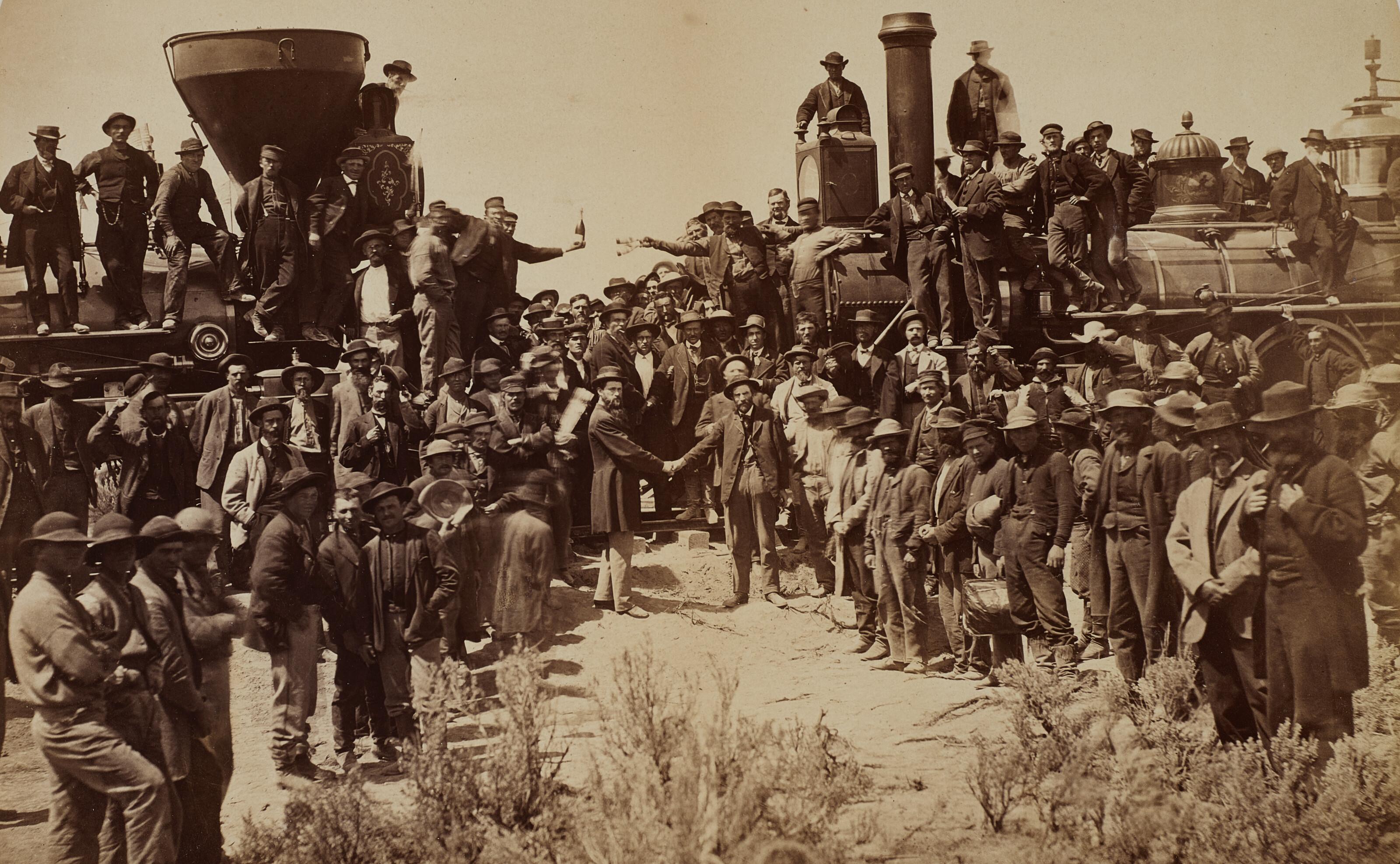
Frick’s rise caught the attention of steel magnate Andrew Carnegie, who recognized in him a kindred spirit—one willing to make tough decisions and drive efficiency. Carnegie, while a visionary, disliked the constant haggling and uncertainty of dealing with outside suppliers. In 1882, Carnegie formally partnered with Frick, gaining direct access to the coal and coke essential for his mills.
In return, Frick became a shareholder and operating officer within Carnegie Steel (the predecessor to US Steel). This partnership was the engine of vertical integration, a revolutionary business model that created the efficiency of Carnegie Steel.
While Carnegie provided the vision, Frick was the man on the ground, the enforcer, the operational genius, and the axe-man. Vertical integration means that a company controls every stage of its production, from the raw materials to the final product. Frick slashed costs, squeezed out inefficiencies, and relentlessly modernized facilities.
It was Frick who engineered the complete vertical integration of the Carnegie empire, ensuring that the company owned the iron ore mines, the ships and railroads to transport the ore, the coal mines, the coke ovens, and finally, the enormous steel mills themselves.
This organization allowed Carnegie Steel to produce steel cheaper than any competitor in the world, revolutionizing steel production and creating an enterprise of unparalleled scale and profit.
The Johnstown Flood: A Deadly Negligence
In 1889, Henry Clay Frick’s name became linked to one of the deadliest disasters in American history—the Johnstown Flood. This tragedy put on very public display the immense power and corresponding lack of accountability held by the Gilded Age elite.
As a leading member of the South Fork Fishing and Hunting Club, a retreat for Pittsburgh’s elite, including Andrew Carnegie, Andrew Mellon, Benjamin Ruff, and Philander Knox, Frick bore responsibility for the poorly maintained South Fork Dam, which collapsed after heavy rains, unleashing a torrent that killed over 2,200 people.
The club was situated above the small industrial city of Johnstown, Pennsylvania, and its crown jewel was the Conemaugh Lake, held back by the South Fork Dam.
The club had altered the dam for convenience, weakening its structure, and ignored repeated warnings of its instability. Specifically, the members had lowered the height of the dam to accommodate a carriage road, amongst other modifications, effectively reducing the safety margin.
When catastrophe struck, on May 31, 1889, the South Fork Dam collapsed.

The resulting surge unleashed 20 million tons of water—the equivalent of the Mississippi River’s flow rate—on the unsuspecting communities below. The resulting wave obliterated the city of Johnstown, traveling at speeds up to 40 miles per hour. Over 2,200 people were killed, with hundreds more injured, making it one of the largest single-day civilian death tolls in U.S. history. Public outrage was heavy, but Frick and his fellow club members escaped legal consequences.
A court ruling essentially established that the dam break was an “act of God,” despite the demonstrable negligence and structural alterations. While some contributed to relief efforts, Frick never publicly acknowledged fault, which went a long way in further cementing his image as a man of power, wealth—and ruthless indifference.
The Homestead Strike: A Defining Conflict
If the Johnstown Flood—an unprecedented disaster—isn’t the defining moment of your public legacy, what follows must, somehow, be even worse. For Henry Clay Frick, it was.
His most infamous moment came in 1892 with the Homestead Strike. As the driving force behind Carnegie Steel’s aggressive cost-cutting, Frick took a hard line against labor unions, viewing them as an unnecessary obstacle to progress and profit.
He was determined to break the influence of the Amalgamated Association of Iron and Steel Workers (AA), the nation’s most powerful craft union, which had a stronghold at the massive Homestead Steel Works outside Pittsburgh..

When negotiations with the Amalgamated Association of Iron and Steel Workers failed, after Frick presented the AA with a steep wage cut and a non-negotiable ultimatum, Frick locked out the workers at the Homestead plant and erected a fortified fence topped with barbed wire. Frick turned the Homestead plant into what was called “Fort Frick“.
Then, he hired the Pinkerton National Detective Agency to bring in hundreds of strikebreakers—a decision that led to one of the bloodiest labor conflicts in American history. The Pinkertons were, in effect, a private mercenary army for hire, notorious for their heavy-handed methods in labor disputes.
On July 6, 1892, the Pinkerton agents arrived by barge and workers met them at the pier. The Battle of Homestead was on. Gunfire and brawls erupted as striking workers fought to keep them out, and by the end of the day, nine striking workers and seven Pinkerton agents lay dead.
The Pennsylvania State Militia (National Guard), 8,000 strong, was eventually called in to restore order, but the damage to Frick’s reputation was done. He had become the face of corporate greed and callousness, a man who would rather spill blood than accept the validity of a labor union. The Homestead Strike crushed the AA’s power and killed the prospect of widespread union recognition in the steel industry for the next four decades.
Not long after the strike, an anarchist named Alexander Berkman—who saw Frick as the ultimate embodiment of capitalist oppression—stormed into Frick’s office, shooting him twice and stabbing him multiple times.
Frick, true to form, refused to collapse. He wrestled Berkman to the floor with the assistance of an employee. What happened next is disputed, but we do know that once Berkman was subdued, Frick insisted on finishing his work before seeking medical attention.
When the doctor was summoned, Frick refused anesthesia and assisted the surgeon in the removal of the bullets.
Though he survived, the attack did little to soften his image in the eyes of the public. He was admired by fellow industrialists for his courage and resolve, but to laborers, he remained the man who had crushed the Homestead strike, and with it, killed the prospect of union recognition for decades.
Steel, Power, and Fortune
Despite the Homestead debacle and the assassination attempt, Frick’s influence in the steel industry only grew. By the late 1890s, tensions between him and Carnegie had reached a boiling point.
The working relationship which had been essential for their mutual success had soured and deteriorated into open hostility. The conflict was both personal and professional. Frick believed Carnegie was meddling too much in business operations—Frick wanted Carnegie’s position—while Carnegie saw Frick’s unrelenting tactics as increasingly reckless and feared the public relations damage they caused.
The fallout culminated in a bitter legal battle over the valuation of their shared assets, but in the end, Frick walked away with an enormous fortune and his business reputation intact.
His next move cemented his status among the titans of American capitalism. In 1901, the ultimate financial consolidator, J.P. Morgan, orchestrated the creation of U.S. Steel, the world’s first billion-dollar corporation, purchasing Carnegie Steel. Frick, a major stakeholder, saw his wealth soar to new heights.
The money he received from the U.S. Steel transaction instantly made him one of the richest Americans in history, freeing him from the daily operational drudgery he now despised.
No longer constrained by the daily operations of steel mills, he turned his focus to banking, serving on the board of directors of institutions like the Pennsylvania Railroad and the new U.S. Steel. He also became a highly successful real estate investor in Pittsburgh and Manhattan, and an insatiable passion for collecting art.

Philanthropy and Legacy
Though his name was synonymous with industrial ruthlessness, Frick had another side—one that took pleasure in art and culture. This conflicting nature is perhaps the most enduring paradox of his legacy.
Beginning in the late 1890s, and accelerating after the U.S. Steel sale, he poured millions into assembling a world-class collection of paintings, sculptures, and decorative arts, including works by Vermeer, Rembrandt, Bellini, and Gainsborough.
He collected with the same intense determination he had applied to the coke business. Many of these pieces would later form the basis of the Frick Collection in New York City, one of the world’s premier art museums.

Frick’s masterpiece of a residence was the Henry Clay Frick House on Fifth Avenue in Manhattan, completed in 1914. This magnificent mansion, designed by Thomas Hastings, was intended to be more than just a home; it was an organized environment for his collection. Frick stipulated in his will that upon his death, the house and its contents would be given to the city of New York as a public gallery.

Frick also gave generously to civic projects, donating land for parks (Frick Park in Pittsburgh is a prime example), hospitals, and libraries. However, for many, no amount of philanthropy could erase the memory of his labor battles or the catastrophe of Johnstown. He remained an intensely polarizing figure until his death in 1919, at the age of 70, admired for his business acumen but reviled for his merciless tactics.
Henry Clay Frick’s life was one of extremes—visionary yet ruthless, cultured, but spoiling for a fight. He helped build the coal and steel industry that propelled America into the 20th century, but he did so with a level of aggression that made him one of the most hated men of his time. Today, his name can still be found, present on museums, schools, hospitals, and in the historical accounts, and framework of American industry.
Was he a necessary force in the country’s economic rise, or the embodiment of unchecked corporate power? Like many of the era, the answer is probably both. We can argue about his methods, but we can’t ignore the results. Henry Clay Frick left behind a country that he fundamentally helped shape, driven by an ambition that never slowed down to see who was left in its wake.




Leave a Reply