Dust and soot was everywhere in Westmoreland County, including in the lungs of the men that lived and worked there. By the early 1890s, the skyline of southwestern Pennsylvania was defined by rows of beehive ovens that burned day and night. This was the Connellsville Coalfield, the center of an industry that turned raw bituminous coal into the fuel required by the Pittsburgh steel mills.
Morewood was a “patch,” a town built by the H.C. Frick Coke Company specifically to house its workforce. While the surrounding Westmoreland hills remained green, the town of Morewood was an environment of smoke and gray dust.
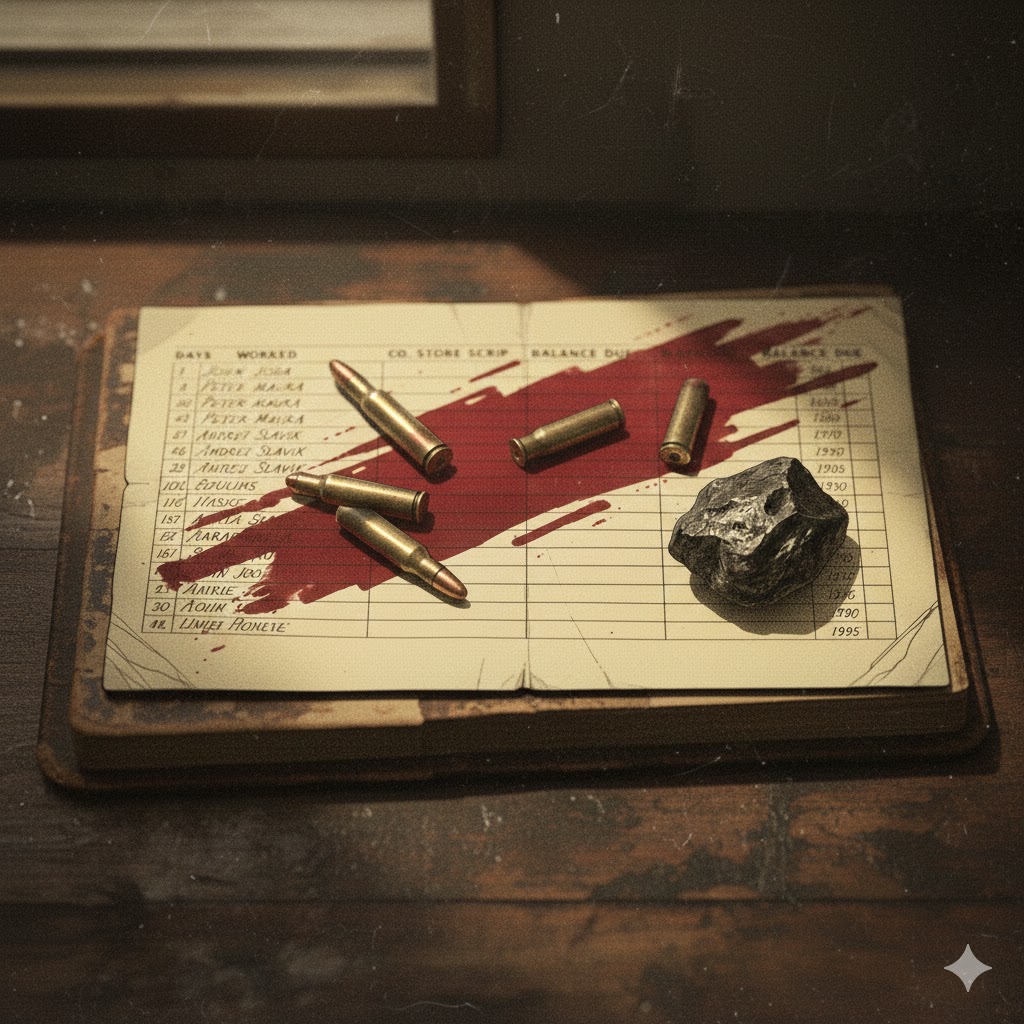
The men lived there because the coal was there, and they traded their labor for company-owned housing and wages often paid in scrip. Henry Clay Frick oversaw these operations with a focus on the bottom line that left no room for negotiation. He viewed his workers as an expense, managed with the same rigidness as the logistics of the railroad lines.
The late 1800s were, to put it mildly, a volatile time for the American worker. In the settlements surrounding Mount Pleasant, the men who spent their days hauling heavy loads under the heat of the coke ovens were looking for a way out of the “sliding scale” wage system. Frick used this setup to cut pay whenever the market price of coke dropped, regardless of the actual work performed.
Living in Morewood meant living under total company oversight. Working for Frick meant living in a Frick house and buying flour at a Frick store. By 1890, the United Mine Workers of America (UMWA) began to find a foothold in these camps. They pushed for an eight-hour day, fixed rent prices, and a wage that didn’t fluctuate based on a tycoon’s market projections.

Shutdown in the Connellsville Coke Region
When the walkout began in February 1891, the change was unmistakable. The constant clamor of machines and ovens stopped, and the sulfur haze that usually hung over the valley began to thin. For the miners, the clarity of the sky, instead of being a pleasant change, was a reminder that no one was earning a check.
Frick did not view this as a labor dispute; he saw it as an interference with his property. To break the strike, the company started evicting families. Guards forced people out of their homes and left their furniture in the road. At the same time, the company brought in replacement workers—many of them recent immigrants who didn’t know the local situation—to restart the fires in the ovens.
The altercation that broke out in early 1891 was not a sudden explosion of temper. It was the result of a slow, calculated tightening of the screws by the H.C. Frick Coke Company.
At the heart of the dispute was the “sliding scale” wage system. To Henry Clay Frick, this was a logical economic tool. To the miners, it was a trap. Under this system, wages were not fixed based on the difficulty of the labor or the hours spent at the ovens. Instead, they were tethered to the fluctuating market price of a ton of coke.
When the steel mills in Pittsburgh were booming and the price of coke was high, the miners saw a slight increase in their pay. However, as soon as the market cooled, Frick lowered the wages across the entire coalfield. The miners were forced to act as unintended business partners with the company, sharing the risks of the market but seeing none of the true profits.
If a depression hit the steel industry, the men in Morewood felt it first, even though their work of shoveling coal and leveling ovens remained just as grueling. This unpredictability meant a family could never truly budget for the month ahead, as their livelihood was tied to ticker tapes and boardroom decisions miles away.
The Rise of the United Mine Workers of America
By 1890, the United Mine Workers of America had begun to organize this frustration. They weren’t just asking for more money; they were asking for a fundamental change in how a worker was treated.
The union’s list of demands was specific. They wanted an eight-hour workday, a massive departure from the twelve-hour shifts that were then common. They also demanded a base wage that wouldn’t drop below a certain level, regardless of what happened to the price of coke.
Beyond the paycheck, the UMWA focused on the “company town” model. They pushed for restrictions on house rent and more transparency in how much the company charged for basic necessities.
In a place like Morewood, where the company was both the employer and the landlord, the union represented the only check on Frick’s absolute authority. They wanted union recognition—a seat at the table—which Frick viewed as an assault on his right to run his business as he saw fit.
As the strike took hold throughout February and March, the company moved from economic pressure to physical displacement. Frick knew that a man with a roof over his head could hold out longer than a man whose children were sleeping in the dirt.
The evictions began in earnest as a way to clear the patch for replacement workers. These “scabs” were often recruited from newly arrived immigrant populations in Eastern Europe. They were loaded onto trains and brought into Westmoreland County, often with no idea that they were walking into a labor war.
For the striking miners, seeing these newcomers move into their former homes and take over their ovens was the ultimate insult. They watched from the outskirts as the company deputies—armed men with legal immunity—protected the people who were essentially erasing the strikers’ lives. The struggle was no longer just about a sliding scale; it was about who had the right to call Morewood home.
The standoff grew longer as winter began to fade into the spring of 1891. What started as a coordinated walkout across the Connellsville Coalfield had transformed into a war of attrition. By late March, the initial energy of the strike was being replaced by a much harder reality: the physical toll of being out of work with no safety net.

Life in the Camps
When Frick’s agents cleared the company houses, the strikers didn’t simply vanish. Many moved into makeshift camps on the outskirts of the patches, while others crowded into the homes of sympathetic neighbors or onto small plots of land not owned by the H.C. Frick Coke Company.
These camps were miserable places. The ground in Westmoreland County was often a slurry of cold mud and melting snow, and without the heat of the coal stoves from the company houses, illness began to spread through the families.
Hunger was the most persistent adversary. The UMWA did what it could to provide relief, but the scale of the strike—involving thousands of workers across dozens of locations—strained the union’s meager resources. For many families, the daily routine became a search for enough food to keep children quiet.
Despite the hollowed-out look of the men on the picket lines, the strike remained remarkably intact during these first few months. There was a shared understanding that if they broke now, the conditions of their labor would only get worse.
The Geography of Conflict
The conflict wasn’t localized to a single street or patch; it was spread across the entire region. Minor clashes had already broken out at various coke works. Strikers would gather near the entrances of the mines to jeer at the replacement workers or “scabs” being escorted in by deputies. These weren’t just shouting matches. Stones were thrown, and the armed guards often responded by leveling their rifles at the crowds.
Each morning, the strikers watched the horizon. In a coke town, smoke from the beehive ovens was the primary indicator of who was winning. If the sky remained clear, the strike was holding. But as March progressed, thin plumes of smoke began to rise from more and more ovens.
The company was successfully importing enough labor to restart the fires. This sight was a psychological blow; it meant the company was finding a way to function without them.
Morewood became a focal point because of its size and its strategic importance to Frick’s operations. The company didn’t just bring in replacement labor; they brought in a private army. Sheriff’s deputies and men who functioned as private security were stationed around the works.
These men were given broad authority to protect company property and ensure that the new workers could move between the mines and the housing without being intercepted by the strikers.
To the miners, these deputies were the face of the company’s refusal to negotiate. Many of the guards were not local to the county; they were outsiders brought in specifically because they had no ties to the community and no hesitation about using force against the people living there.
The presence of these men, combined with the sight of “scabs” living in the homes the strikers had recently occupied, turned Morewood into a powder keg. By the beginning of April, the desperation of the winter had hardened into a collective need for a direct confrontation. The workers realized that picketing from a distance was no longer enough to stop the ovens from burning.
The morning of April 2, 1891, did not begin with the chaos of a riot. It began with a parade. Hundreds of strikers decided to gather. They came from the neighboring patches—Standard, West Overton, and Bridgeport—converging into a column that eventually grew to nearly a thousand people.
They weren’t an unorganized mob. Perhaps most striking was the presence of a brass band. The music was meant to keep spirits high, and it was loud enough to echo off the hills and announced their arrival long before they reached the gates of the Morewood works.
The crowd didn’t disperse when the sun went down. By the early hours of April 3rd, several hundred men remained gathered near the Morewood coke works. They weren’t there just to shout; they were there to prevent the morning shift of replacement workers from reaching the ovens.
Inside the perimeter of the works, the atmosphere was just as anxious as outside, but far better armed. Captain Loar, the man tasked with leading a force of deputized guards, had positioned his men with a clear view of the approaches.
These deputies were not there to de-escalate. They were there to ensure the Frick company’s property remained undisturbed, and they viewed the mass of miners as a hostile force, not as neighbors in a dispute.

The Flashpoint
On the morning of April 3rd, the strikers moved toward the works. Accounts of what happened next are affected by the bias of those who survived, but the result was a matter of bloody record. The deputies, stationed behind the cover of the works and the surrounding buildings, did not wait for an assault.
When the crowd pushed forward, the order was given to fire.
The sound of the Winchesters tore through the morning. It wasn’t a warning volley fired into the air. The deputies aimed into the thickest part of the crowd. Men who had been shouting slogans a moment before were suddenly on the ground.
The brass band stopped. The discipline of the march dissolved into a frantic scramble for cover as the deputies continued to fire into the retreating backs of the miners.
When the smoke cleared, the ground near the Morewood ovens was littered with the wounded and the dead. Seven men died where they fell. Two more would later succumb to their injuries, bringing the immediate death toll to nine.
The victims were largely young men, immigrants who had come to the Connellsville Coalfield seeking a better life, only to find the end of it in a Pennsylvania patch town. They were shot in the chest, the head, and the back.
As the survivors carried the bodies away, the silence that returned to Morewood was different than the one that had followed the strike’s start in February. This was the silence of a massacre, a signal that the H.C. Frick Coke Company was willing to trade human lives to keep the ovens burning.
The gunfire at Morewood didn’t just end the march; it drew a line in the Pennsylvania dirt that was intended to clarify the relationship between the men who did the work and the men who owned the machines. To understand why the morning of April 3rd turned into a slaughter, it is necessary to look at the specific groups standing on either side of that line.
The Men in the Ranks: The UMWA
The strikers were not a faceless mass, though the company often treated them as such. They were a mix of local-born laborers and a growing number of Eastern European immigrants—Slovaks, Poles, and Hungarians—who had been recruited to the coalfields. The United Mine Workers of America, still a young organization in 1891, acted as the connection between these groups.
The union provided a structure that the miners had never possessed before. They organized the brass bands and the parades not just for show, but to prove to Frick that they weren’t just a collection of disgruntled individuals. They were a coordinated body.
However, the UMWA was also in over its head. It was trying to fight a war of logistics against one of the wealthiest men in the world, and while they could organize a march, they had no defense against the state-sanctioned violence that Frick was able to summon.

The Architect: H.C. Frick
Henry Clay Frick was a man who viewed compromise as a form of surrender. By 1891, he was already the “Coke King,” having consolidated the industry under his own name and the banner of his partnership with Andrew Carnegie. Frick’s philosophy was simple: he owned the land, the mines, and the ovens. Therefore, he owned the terms of employment.
To Frick, the strike was a criminal trespass on his property rights. He didn’t just want the ovens running; he wanted the union broken so completely that it would never challenge him again. He was the one who authorized the evictions and coordinated with the local authorities to ensure his “property” was protected by men with guns.
For Frick, the blood spilled at Morewood was a regrettable but necessary cost of maintaining industrial order.
The Enforcers: Captain Loar and the Deputies
The men who actually pulled the triggers were led by a man named Captain Loar. These were not soldiers in a formal army, nor were they typical town beat cops. They were a group of about 40 men, many of whom were sworn in as deputies specifically to deal with the labor unrest.
These deputies occupied strange ground within the law. They carried the authority of the county sheriff, but their loyalty—and their paychecks—were tied to the interests of the coal companies.
On the morning of the massacre, they were positioned behind the cover of the coke works’ buildings, looking down on the strikers. This was not an age of crowd control or “de-escalation”; they were armed with rifles and told that the men approaching them were a “mob” threatening the peace. When the order to fire was given, they shot to kill, acting as the private military for a corporate empire.
The Replacements: The “Scabs”
Often lost in the history of the massacre are the men inside the works—the replacement workers. These men were in a desperate position of their own. Many had been led off immigrant ships and onto trains with promises of steady work and housing, only to arrive in a town where the previous occupants were living in tents and cursing them in languages they didn’t understand.
They were the wedge Frick used to split the labor movement, and their presence at the ovens was the spark that drew the strikers toward the rifles of Captain Loar’s men.
As the echoes of the Winchesters died out, the immediate task for the survivors was the recovery of the bodies. The dirt paths around the Morewood works, black with coal dust, were now slick with the blood of men who had been alive minutes before.
The Burials at St. John’s
The community did not have long to grieve in private. The strike was still technically active, and the presence of the dead only heightened the atmosphere of a town under siege. Nine miners had been killed. Their names—men like John Joda and Peter Maura—were indicative of the immigrant roots of the workforce that Frick had cultivated and then turned against.
The funeral procession was a somber bookend to the march that had occurred only days prior. Thousands of miners and their families gathered to follow the wagons to St. John the Baptist Cemetery in Scottdale.
They buried several of the victims in a common area, a symbolic choice of the collective nature of their struggle. There were no brass bands this time; there was only the sound of the prayers of a community that realized exactly how much Frick was willing to sacrifice to keep his ovens burning.

The Shield of the Law
In the wake of the killings, there was a public outcry for justice. Captain Loar and his deputies were brought before the court to answer for the lives taken at the Morewood gates. To the miners, the case seemed open and shut: a group of armed men had fired into a crowd of people, many of whom were shot while trying to run away.
However, the legal system was not an impartial observer. The courts were deeply intertwined with the industrial interests that powered the state’s economy. During the trial, the defense argued that the deputies were acting in self-defense against a “riotous mob” that threatened private property. The narrative was changed from one of a massacre to one of a necessary defense of order.
In the end, Captain Loar and his men were acquitted. The verdict sent a clear message to the labor movement: the law stopped at the company gate. If a man died while interfering with the “peaceful” operation of a Frick mine, his death was his own fault.
This legal immunity for company-aligned forces would become a recurring theme in the Pennsylvania coalfields and industry for decades to come.
The Collapse of the Strike
The acquittal of the deputies was the final blow to the workers’ morale. By May 1891, the strike that had begun with such organized hope was falling apart. The UMWA, exhausted of funds and unable to protect its members from either the hunger of the camps or the rifles of the guards, could no longer maintain the walkout.
One by one, the men began to return to the ovens. They went back on Frick’s terms, often forced to sign “yellow-dog contracts” or simply accepting the same sliding-scale wages they had fought to abolish. The replacement workers stayed in many of the houses, and those strikers who were seen as “troublemakers” were blacklisted, forced to leave Westmoreland County entirely to find work.
The fires were relit, the smoke returned to the valley, and the H.C. Frick Coke Company resumed its dominance, its authority now reinforced by the memory of the blood spilled at Morewood.
The Morewood Massacre did not happen in a vacuum, nor was it a localized tragedy that faded with the spring rains of 1891. It served as the blueprint for the decade of industrial warfare that followed. The events in Westmoreland County proved that the intersection of private corporate power and state-sanctioned violence was a barrier the labor movement was not yet equipped to break.
Foreshadowing the Battle of Homestead
The significance of Morewood is often overshadowed by the Homestead Strike of 1892, which occurred just a year later. However, the connection between the two is direct. Henry Clay Frick’s success in breaking the coke workers and his subsequent acquittal in the courts emboldened him.
When he moved on to manage the Carnegie steel works at Homestead, he brought with him the same refusal to negotiate and the same reliance on armed force that had “cleared the air” at Morewood.
For the American public, Morewood was a warning shot. It demonstrated that the “Pinkertonism” and deputy systems were not just about protecting property; they were about the total subjugation of the workforce.
The tactics Frick refined in the Connellsville Coalfield—the evictions, the importation of unaware immigrant labor, and the use of the “scab” as a psychological weapon, and the law as a literal one—became standard operating procedure for Gilded Age industrial barons. Morewood was the dress rehearsal for the more famous bloodlettings elsewhere.
A Fracture in the American Dream
For the immigrant communities of southwestern Pennsylvania, the massacre was a brutal introduction to American industrial life. Many of the men shot at the Morewood gates had arrived in the United States believing that their labor would be met with fair treatment and the protection of the law. Instead, they found a system where their lives were worth less than the coal they mined.
The massacre created a deep-seated distrust of the legal system and the “law and order” rhetoric of the coal companies. This cynicism didn’t kill the union movement; it radicalized it. The UMWA learned that peaceful parades and brass bands were insufficient against Winchesters.
The defeat at Morewood forced the labor movement to reorganize, eventually leading to more militant and politically active strategies in the early 20th century.

Preserving a Buried History
For over a century, the Morewood Massacre remained a footnote, a story told in the kitchens of Connellsville, Scottdale and Mount Pleasant but absent from most history books. Unlike Homestead, which became a landmark of American history, Morewood was a “patch town” tragedy, easily swept under the rug by the companies that continued to dominate the region.
It wasn’t until the year 2000 that a Pennsylvania State Historical Marker was finally erected near the site of the old coke works. Today, the beehive ovens are gone, reclaimed by the hills or hidden under layers of overgrowth. However, the legacy remains in the geography of the region. The graves at St. John’s Cemetery still stand as a casualty reminder of the nine men who died for the right to an eight-hour day and a stable wage.

When the shooting stopped at Morewood, the strike was effectively over. Several men were dead, and the balance of power had been settled in the most direct way possible. It ended with gunfire in the street and deaths that could not be undone. Whatever conclusions were later drawn from the massacre, they came too late for those involved.





Leave a Reply