
The morning of January 12th, or a morning very much like it, didn’t begin with a warm sunrise. It was gray and overcast, and confirmed the cold had not broken. In the Connellsville rail yards, the frigid air was still enough to hold the steam from the switch engines—white pillars that rose straight up, then dissolved into the haze.
Out on the sidings, hundreds of coal hoppers sat locked in place. The iron brake shoes were frozen tight against the wheels, the wheel bearings stiff with congealed grease, and the fine, black dust of bituminous coal in them was frozen into a solid mass. The hoppers weren’t just loaded; they had become symbols of national immobility.
From down on the mines, the night shift miners emerged. They moved past the coke ovens, which were, ironically, blazing at full tilt, casting a roaring heat against the biting cold. They saw the loaded trains, endless rows of black cars waiting on the tracks, and felt a familiar frustration. Their work was done. The coal had been mined, brought up, coked, and loaded. But, it wasn’t moving.
A mile away, in the telegraph office, the signal key chattered with alarming news that confirmed what the coal towns already knew. The reports came in from every frozen point in the railroad system: switches iced over, air lines ruptured, wheels seized, locomotives stranded in snowdrifts, classification yards a solid mess of metal and ice. The nation’s rail network was collapsing, one frozen mile at a time.
Meanwhile, in the small homes lining the backstreets, housewives shivered by stoves that hadn’t seen a full load or fresh delivery in days. They nursed the last of the coal dust and splinters, saving the good lumps for the most dire moments. They knew that the problem was not coal production. They could see the black mountains of fuel everywhere they looked, an absurd backdrop to their own desperate cold.
This was the strange paradox of the bitter winter of 1918: We were surrounded by coal, but the cities were cold.
The fuel was abundant, mined by the sweat of thousands of men. But the supply arteries of the country—the steel rails—had hardened into a paralyzed system. For the towns in the shadow of the mines, it felt like a bitter standoff: the coal waited, the trains waited, and the freezing country waited with them.
America’s Winter Fragility And How Heat Rode the Rails
To understand the crisis that unfolded across the American Northeast in that frozen January, one must first understand a fact of the era: in 1918, the United States ran on coal. Coal was not merely a source of heat for homes; it was the backbone of modern life. It fired the boilers that generated over 70% of the nation’s electricity, drove the machinery in every factory, and fueled the locomotives that moved it. If the coal stopped, the country stopped.
This system had a systemic vulnerability: most major cities—Boston, New York, Philadelphia, Chicago—maintained only days of fuel on hand. They operated on a shockingly thin margin because the appetite for coal was relentless. Factories and utilities required thousands of tons every twenty-four hours to maintain constant heat and light. The locomotives themselves were immense coal burners, needing constant resupply to keep the network running, and every furnace and stove in the sprawling urban centers demanded daily feeding to keep the cold at bay.
The logistics were unbelievably demanding. Coal had to move every single day from the mining fields of Pennsylvania and West Virginia to the consuming centers. The only method capable of achieving this massive, daily throughput was the railroad. The rails were the nation’s veins, designed for an endless, pulsing flow of raw material. They funneled production from the mines, through classifying yards, and into the cities. When this network functioned, America was warm and productive. But the entire apparatus was a sprawling, complex, and intricate machine, highly sensitive to disruption.
This dependence created a dangerous, all-or-nothing situation. The nation had not yet diversified into oil or natural gas for mass heating. It was a single-point of failure system. The problem was simple enough: When the rails clogged, America froze. The winter of 1917–1918 was about to demonstrate just how easily those arteries could freeze solid.

The First Great Breakdown — The Coal Famine of 1917–1918
The paralysis that took hold in late 1917 was not caused by a single event, but by the confluence of every conceivable obstacle. The weather was the catalyst. Record-breaking cold settled over the continent, turning water into ice and ice into granite. Blizzards swept the Midwest and Northeast, burying tracks and switches faster than any crew could clear them. But the real enemy was ice-choked switches and frozen brake lines, turning thousands of pieces of rolling stock into useless dead weight.
This natural disaster collided with the unrelenting demands of the Great War. The railroads, already running near capacity, were now overloaded with troop trains, munitions, and war materials, all demanding absolute priority. Years of high usage meant locomotive shortages were chronic, and the rail yards themselves—the critical locations where trains were sorted and reassembled—were simply not built to handle the volume and complexity of wartime traffic under severe winter conditions.
The result was not just congestion; it was a total mechanical and systemic failure, a single mass of frozen metal spreading across Pennsylvania and beyond.
Government Intervention That Broke the System
Faced with the spectacle of a nation freezing while mountains of coal sat stationary, Washington intervened quickly, with disastrous results. The newly formed Fuel Administration began issuing a bewildering avalanche of “priority orders.” Coal shipments were suddenly rerouted in an attempt to force supply into the most desperate cities. This was far more destructive than helpful. The government, in its haste, broke the existing, more efficient logistical patterns of the railroads.
Trains were sent onto lines where no engines were available, or jammed into yards already overflowing with other priority materials. Civilian coal was effectively deprioritized in favor of war shipments, even when the war materials sat unused for weeks. The attempt to apply an artificial, centralized order to a decentralized, sprawling network merely exacerbated the chaos. The entire system buckled under the twin burdens of impossible, bureaucratic constraints and the unrelenting winter weather. The resulting mess was, in large part, a self-inflicted wound.
The consequences arrived quickly, and lethally, in the northeastern cities. Without the daily influx of fuel, boiler fires went out. Schools shut down, not for snow days, but for lack of fuel to generate basic heat. Hospitals began the uncomfortable task of rationing heat and light, scrambling to get patients into layers of blankets.
The cold deaths mounted, quietly at first, then conspicuously, particularly among the poor. In desperation, families turned to any source of fuel they could find. People began burning furniture, tearing up floorboards, using wooden porch railings, and scavenging for scrap to generate a few hours of warmth. The lack of fuel moved from an inconvenience to a matter of survival in days.
Wilson Seizes the Railroads: A Government Solution for a Government Problem
The crisis was now a national emergency, and its cause was seen, rightly, as a failure of the logistics organization under wartime duress. In late December 1917, President Woodrow Wilson took the extraordinary step of nationalizing the entire rail system, placing it under the new U.S. Railroad Administration. The move was less about improving the system and more about untangling the severe congestion caused by previous government priority orders.
The new administration worked to clear the choked classification yards—the physical bottlenecks that were paralyzing movement—and abolished the conflicting government mandates. While this stabilized the immediate flow, the nationalization came at a high cost. The government ordered thousands of new locomotives and over a hundred thousand new rail cars, but these would not arrive for many months.
Meanwhile, required maintenance across the network was severely deferred by order. The result was that the infrastructure, already strained, deteriorated significantly under federal control. The seizing of the railroads was a radical wartime necessity that broke the immediate paralysis, but it was a desperate measure that sought to remedy a breakdown partly initiated by Washington’s own commands.

Connellsville’s Crucial but Complicated Role
If homes ran on coal, the steel mills ran on coke, and for decades, Connellsville was the undisputed capital of the coke industry. Coke—the purified fuel baked in vast banks of ovens—was indispensable. It was the material that could produce the intense, consistent heat required to forge the steel used in everything from skyscrapers to farm implements.
In 1918, as the country poured its industrial might into the war effort, the demand was staggering. The coke fields of the region fed the hungry furnaces of Pittsburgh, the rail yards of Cleveland and Philadelphia, and, most critically, the shipyards that were attempting to enlarge a tiny shipping fleet faster than enemy ships could sink it. Every ingot of steel that rolled out of a mill owed its existence to the red glow radiating from the Connellsville oven banks.
The Paradox of Plenty
However, this central role created a painful, localized irony known locally as the “Paradox of Plenty.” While the Northeastern cities were literally freezing, Connellsville mines and coke ovens were running full tilt—even double shifts—driven by the government’s need for war materials. The result was an accumulation that defied logic.
The rail yards were overflowing, every available track choked with loaded hoppers, forming mountains of black, unusable fuel. Residents walking to the store or heading to the pit mouth saw the massive stockpiles daily. They were staring at what amounted to an enormous, idle reservoir of heat while reading newspaper reports detailing cold deaths and fuel riots in the cities their product was meant to save. Production was never the problem; movement was the crisis.

Local Voices and Experiences
The pressure created a unique and uneasy strain on the people of the region. Miners, having done their backbreaking work, were frustrated that their effort vanished into a logistical black hole. They produced the fuel, but the system failed to deliver it. The railroad workers bore the physical burden of the weather crisis, clearing rails and switches by hand, chipping ice with axes for twelve hours straight to move cars just a few hundred yards.
Merchants and families in the coal towns found themselves improvising alongside the cities, even though they lived on top of the resource. Local shortages of non-priority domestic coal forced conservation and scrounging. But there was also an awareness of their predicament. There was a sense of pride that their product was central to the war effort, but it was tangled with a sense of guilt that those military needs meant civilian suffering elsewhere.
As a result, Connellsville’s experience was one of close proximity to the resource that was desperately scarce fifty miles down the line—a town running on a kind of exhausted pride and a growing frustration that their efforts were being wasted.
A Second Winter of Strain: The WWII Rail Crisis
The vulnerability exposed in 1918 was not forgotten, but it was structurally repeated a quarter-century later, when America again found itself at war. By the early 1940s, the nation’s infrastructure was once more operating at maximum capacity. This time, the priorities were even more absolute. Troop trains held undisputed claim to the tracks, running constantly to move millions of servicemen to ports and training camps. Next came the immense streams of materiel—ammunition, aircraft parts, tanks, and steel. Coal for heating, once again, found itself relegated to the bottom of the long list of wartime necessities.
Complicating Factors
The second rail crisis was compounded by unique mid-century problems. The government implemented blackout regulations along the coasts and near industrial targets, dramatically slowing yard operations and track inspections at night. The workforce was also stretched thin; many experienced engineers, foremen, brakemen, and maintenance workers were now serving overseas.
Those who remained worked longer shifts with fewer resources, trying to manage an ever-increasing flow of wartime goods with an aging, and wearing, set of tools. Just as in the previous war, rolling stock—the cars and locomotives—faced chronic shortages and deferred maintenance, forcing the system into a dangerous state of high production mixed with increasing fragility.
While the 1918 crisis was explosive, the World War II shortage was a more subtly managed, chronic strain on the domestic front. Cities were warned months in advance to conserve electricity and fuel. Factories put heat on “low steam” to preserve stock. Power plants and utility companies watched their critical coal stockpiles dwindle, knowing a cold snap or a derailment could initiate a major blackout.
Households were asked to observe “fuel conservation Sundays,” voluntarily keeping their thermostats low to ease the burden on the railways and utility companies. This wasn’t a war fought just on the battlefield, but also in the chilly homes and boiler rooms of industrial America, proving that the failure of logistics was as threatening as the enemy abroad.
Learning from the chaotic and counterproductive intervention of 1918, the government’s approach to the WWII rail crisis was less disruptive, focusing on targeted efficiency improvements rather than outright seizure. Emergency winter schedules were introduced, routing trains away from known bottleneck junctions. Priority orders were managed more judiciously, and some essential civilian coal movements were temporarily eased to clear the most congested yards.
This measured approach allowed the professionals within the system to manage the constant strain, stabilize the flow of critical fuel, and prevent a complete national freeze. The effort bought the country just enough time, and by the spring of 1944, the massive rail system, though exhausted, had managed to stave off a catastrophic domestic shortage.
The Human Winter: Stories From the Cold
The historical record often speaks in tons of coal and miles of track, but the real history of the winter crises is ultimately about the ice and desperation, played out in the daily, grinding experience of ordinary people.
Consider the housewives in Philadelphia or Boston, bundled against the cold, standing in line at a local coal yard. They weren’t waiting for a full delivery; they were waiting for the yard foreman to dole out a single, meager bucket of “emergency dust” that might keep the kitchen stove viable for another six hours. Each woman carried the anxiety that their family’s survival—the difference between a manageable chill and a life-threatening one—depended on the whim of a system that had failed them.
Meanwhile, back on the tracks and rail yards, the railroad switchmen lived a different kind of frozen hell. A retired switchman recounted the days on end spent walking the long lines of cars with an axe and a blowtorch. They were physically cutting away the ice—smashing it out of the frogs and points—to make the necessary rail changes, their hands numb and stiff from the cold, fueled by the necessity of clearing one more track. Every foot of cleared rail was an exhausting human victory against the total paralysis brought on by nature.
In the coal towns like Connellsville, the sense of helplessness was pervasive. Miners working double shifts—sweating in the relative warmth of the earth—would emerge only to see the same rows of loaded hoppers that had been frozen there the day before. The physical effort and the product were there, but the national reward—the ability to keep the country warm—was denied by external flaws. It created an infuriating contrast: the men were heroes of production, but their towns, too, had to improvise heat just to survive.
In the cities, as the crisis deepened, there was shared sacrifice. Neighbors who still had fuel would cluster in common rooms, sharing the warmth of a single small fire and the glow of a single lamp. The despair, however, was overwhelming for those whose supply finally ran out, leaving them with the sight of the last bucket emptied, knowing the cold would inevitably win the night.
For the people in the coal fields, the complexity was, again, layered: a shared sense of pride that their product was the most vital commodity in the war effort was perpetually undermined by the frustration that their back-breaking labor was for naught, the fuel tied up in the engines of war, unable to reach the homes and hospitals that needed it most.
They lived in the shadow of abundance, seeing their crucial contribution reprioritized and causing suffering elsewhere. These were the human winters, stories missing from the books and grand summaries of policies, but were much felt in numb fingers, shared blankets, painful muscles, and the gnawing fear resulting from the silent, idle trains.

What the Coal Shortages Revealed
The crises of 1918 and 1944 were more than just logistical failures; they were evidence of America’s hidden dependencies. In the end, thousands died, and countless more suffered permanent injury.
Supply Wasn’t the Problem; Systems Were
The most frustrating truth revealed by the cold was that the mines had produced. The coal, in colossal quantities, was there. The problem was never the resource itself, nor the physical labor of extraction. The failure was entirely structural.
The nation’s logistics arteries were blocked—clogged by record-breaking weather, by an incompetent bureaucracy that issued conflicting, impossible priority and movement orders, and by the relentless, non-negotiable needs of war. The entire flow from the mine seam to the city boiler was dependent on thousands of fragile connections, and when the central logistics system froze, the entire productive effort was rendered useless.
The Hidden Dependence of Modern America
These freezing winters delivered a shocking lesson in just how vulnerable a modern, industrial society was before the diversification of fuel sources. Before the widespread adoption of oil and natural gas for heating, the failure of a single, complex transport mechanism could unravel the basics of life—heat, light, and power—in a matter of days. The crisis forced Americans to recognize that the warmth they took for granted was not a guaranteed comfort, but a highly perishable commodity.
While the specific dependence on coal trains has lessened, this core vulnerability has merely evolved. Today, the reliance on large-scale energy transport remains absolute. Instead of solely coal on the rails, we depend on millions of gallons of oil and gas moving through vast pipeline and trucking networks, and a complicated grid managing electricity generated across wide regions.
The system still requires production and transport capacity to handle maximum demand spikes—often during the very same severe weather events that threaten the infrastructure. The risks, therefore, have not been erased; they have simply been transferred to new pipelines, roads, transmission lines, and power plants, which are all still subject to the same pressures of weather and unexpected demand surges.
The Invisible Heroism of Industrial Workers
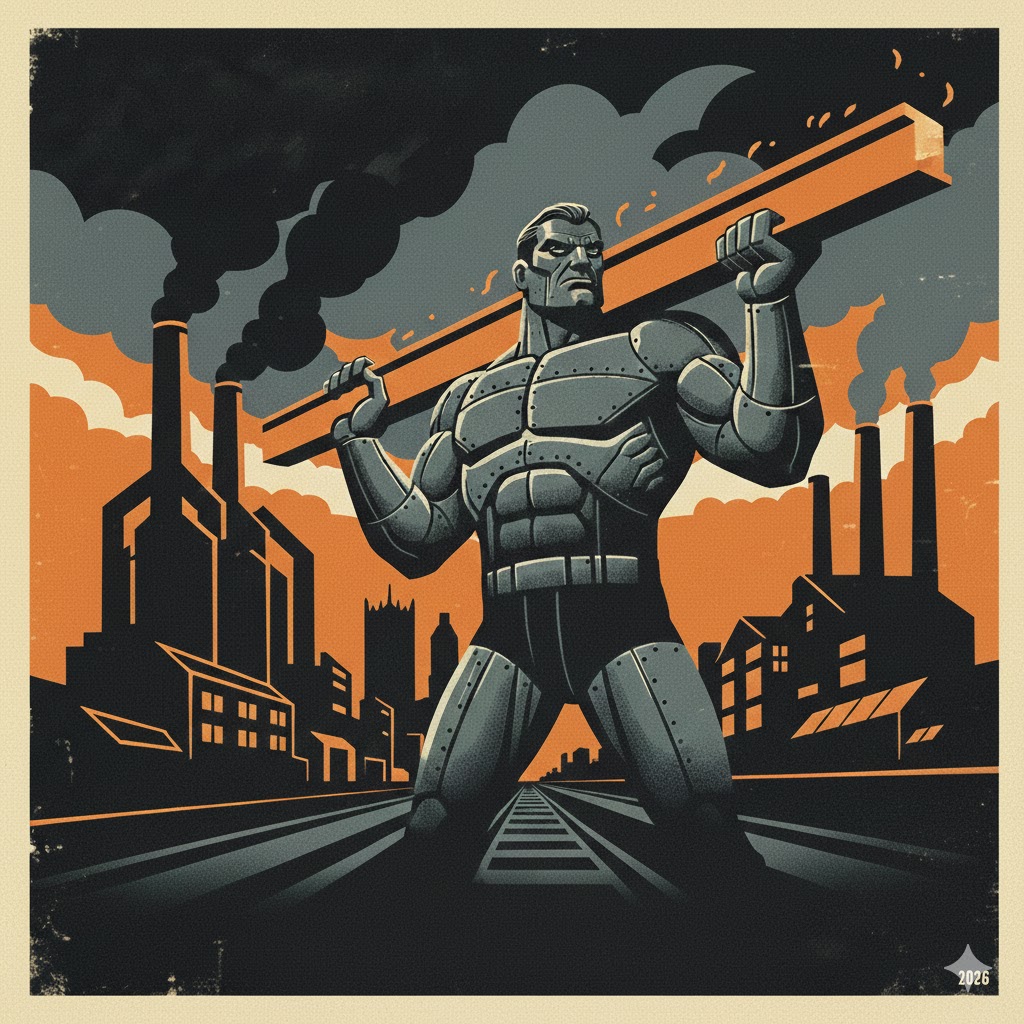
While the government and railroads took the heat for the failure, the successes were due to the stubborn physical effort of the industrial working class. The people who kept the nation alive in winter were the miners who risked going underground, the brakemen, conductors, and engineers who faced frozen locomotives and cars, the yardmasters who struggled to clear the bottlenecks, and the boiler men who nursed every last pound of fuel.
Theirs was a collective heroism that kept essential functions sputtering along, a relentless commitment to physical work that goes largely unacknowledged in the national memory.

What We’ve Forgotten
Today’s reader rarely considers the monumental, collaborative human effort required to keep one home warm in the era of coal. We have collectively forgotten the enormous scale of the logistical ballet that had to be performed every single day. We no longer rely on coal towns in the way we once did, and places like Connellsville have slipped from the national memory.
But for those two frozen winters, the collective warmth, survival, and industrial might of entire cities depended entirely on the product that came from those deep coal seams and on the ability of a fragile, war-strained rail system to keep moving.
When the Trains Finally Came
Unfortunately, the thaw did not arrive as a sudden breaking of the ice, but as a slow, agonizing process. Weeks after Wilson’s order and the monumental effort to untangle the frozen classification yards, the system began to groan back to life. A rail line would suddenly clear, a switch would finally give way, and a backlog of trains—some carrying coal that had sat still for more than a month—would begin to move.
In Connellsville, the first coal train to pull out after the weeks of paralysis was an event. It was not met with cheers, but with a sense of weary relief. The sight of the loaded hoppers finally rolling, the sound of the steam engine’s exhaust finally gaining momentum, represented the resumption of purpose. The coal, the coke, was leaving. The work had been validated. The paradox of plenty was, for the moment, resolved.
In the cities, the relief was both physical and psychological. People woke to the feeling of warm radiators, the hiss signaling that the boiler fires had been stoked. No longer frozen rooms, schools reopened. The hospitals could raise the heat, ending the additional threat to patients.
The crisis faded quickly from the front pages, replaced by new war news, but the memory remained for those who lived through it.
The winter of 1918, and its encore in the 1940s, was a rare moment of exposure. It was a time where the elaborate machinery of modern civilization was stripped away by cold and war, revealing how the invisible connections that bind society—logistics, infrastructure, organization, and transport—were the real foundations of comfort.
The lesson was simple, but easily forgotten:
In the end, it wasn’t coal that was scarce—it was movement.
And for a few frozen weeks, America learned how fragile its warmth really was.





Leave a Reply