Author’s Note: Most writing about this week in 1941 focuses on leaders, strategy, and military decisions. This series takes a different angle. It looks at how December 7–13 was felt by ordinary Americans—in their homes, stores, churches, and workplaces—as they tried to make sense of a world that had changed overnight. It’s a look at the first week of the war as most people lived it, far from the headlines but shaped by them all the same. To catch up, check out the piece for December 6th.
It was the quietest day of the week, until a single voice from Washington cut through the silence and changed their world.
In 1941, the American Sunday had a specific feel—a set of sounds and activities that wrapped the day in ordinary routine. It was time pulled out from the week, a pause pressed against the demands of work. Across city blocks and country roads, the morning moved slowly.
In older neighborhoods coal smoke wafted from chimneys in the winter air. Coffee brewed in kitchens; the smell of bread and frying bacon threaded through apartments and small houses. People went to church; they came home and sat around tables engaged in conversation. The week’s anxieties were shelved, and time with family and friends, and the making of a meal took its place. Women tied on aprons, rolled up their sleeves, and kept an eye on the oven as they moved about the kitchen. A roast needed time, a leg of lamb even more. The cooking called for patience, and was all part of the family Sunday routine.
A Sunday afternoon in December belonged to the living room. Children, scrubbed and often still in their Sunday clothes, sat cross-legged on rugs, bickering over the banker’s chair during a game of Monopoly, or playing with toy cars along the floorboards. As any parent can tell you, their laughing, even the arguing, made the house feel alive in a real way. Teenagers gathered around the gramophone, dropping the needle onto the latest 78s.
Music mattered, and the Big Band sound filled most rooms: brass, percussion, an easy beat. The #1 song on the charts, Glenn Miller’s “Chattanooga Choo Choo” was everywhere—on the radio, on the jukebox at the corner diner, on someone’s record player. The song’s upbeat and jaunty lines about trains and schedules set a bright tone; the idea of being at war felt remote, a headline for the foreign pages, the kind of thing gentlemen in editorial cartoons argued about over cigars and brandy.

Fathers settled into armchairs, Sunday newspapers opened wide. The newspaper was a familiar diversion–the rustle of the pages, the comics tucked between the serious sections. This was their time to be left alone with it for a little while, to wander through their own thoughts. Household tasks could wait; the day moved at a slower pace.
Even the streets moved differently. Shopkeepers re-stocked and swept sawdust from doorways, wiped glass until it was crystal clear, set out small displays and polished the brass on doorways. Traffic moved slowly. In small towns, neighbors called across porches. Conversations touched on politics or the weather but rarely on anything that demanded immediate action. On December 7, 1941, most people felt removed—safely removed—from the wars that had been tearing across Europe and Asia. Questions of aid to Britain or conscription were a matter of debate for another day, not an immediate interruption of a Sunday.
Morning and Midday: Small Things
A few hours of December 7 deserve their own attention because the little domestic scenes are often the source of the memory. In a three-room Brooklyn apartment, Mrs. Rivera lifted a potato out of boiling water and set it aside to cool, thinking about her gravy and whether the children would eat their greens. She paused to turn the radio volume dial and listen to a voice explaining weather fronts. For her, this was an ordinary part of another ordinary Sunday.
In a Pennsylvania steel town, men stopped their reading to check the time, then returned to the sports pages; later the stories of overtime and ration coupons would matter more, but not yet. Out on the plains, a farmhouse stove warmed up as, outside, children chased one another in the yard, careless for the moment of the world beyond their county line.
At the corner soda fountain, the usual chatter continued. The soda jerk wiped down the counter, a familiar regular removed his hat and asked about his friends new job. A record played over the store speaker while people smiled, browsed, ordered, and expected the day to go on as it always had.
These small particulars are the last moments of normalcy. In those moments, life moved in its usual way. That way of living would be lost forever with the attack that was about to begin.

The Silence: 2:31 PM Eastern Time
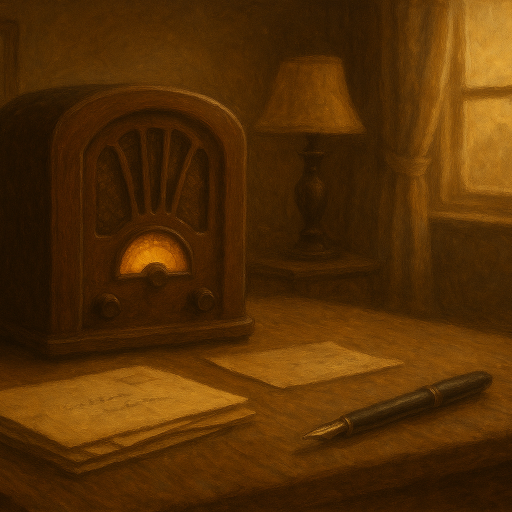
Radios were the day’s backbone, sturdy pieces of furniture with wooden faces and dials that connected the home to a much larger world. Just after 2:30 in the afternoon Eastern Time, living rooms across the country were filled with the New York Philharmonic or a Sunday Serenade. The music played. Then it stopped. Not an ordinary pause or commercial break. The sound simply ended, as if someone had turned it off.
Then a voice read a bulletin. John Charles Daly of CBS, still a young unknown who would later gain fame as the host of Who’s Line Is It Anyway?, announced:
“The Japanese have attacked Pearl Harbor, Hawaii, by air, President Roosevelt has just announced.”
The words were straightforward, but confusing, terrible. They came without build-up or ceremony. People put down irons, marked their place in the paper, paused mid-argument. The thought hit at once, almost unbelievable: it couldn’t possibly be real. Hawaii? That was a postcard, a tropical vacation spot, an island thousands of miles away. How could it be the center of sudden catastrophe?
But, the repeats came. Networks relayed wire copy; local announcers tried to pick up reports from Honolulu. The national airwaves filled with dispatches that were sketchy and abrupt. A string of brief reports filled millions of rooms: planes over the harbor, bombs dropped, explosions, smoke. The full shape of the attack could not be learned in a single bulletin—only its headline: we were hit.
Immediate Reactions, Small and Personal
From front stoops and patios, living rooms and kitchens, main streets and street cars, people moved to see if it was true. In a Chicago walk-up, Mrs. Irene Collins let the iron cool, forgetting the laundry. “Harold,” she called. He folded the sports page and came into the kitchen, brow furrowed. In Connecticut, Mr. John Langley let his copy of the Herald Tribune drop, the pages falling to the floor. A neighbor called over the hedge, “You hear….?” and they stood there, waiting for more.
On a New Orleans street, a man–a veteran of the last war–leaned toward the radio, waiting for more. In an Ohio mill town, men gathered at the corner bar, the bartender lifting the receiver searching for news. At this moment, ordinary activities changed. Within the hour, people checked for news and papers, considered what to do next, and wondered what suit would be appropriate for a run down to the recruiting office.
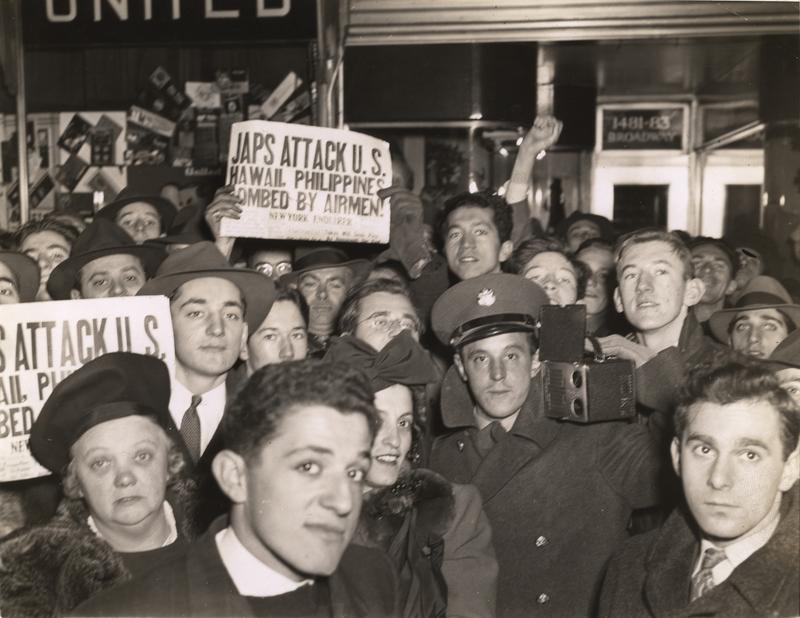
Movie theaters were stopped mid-reel. Ushers turned the house lights on slowly so as not to panic people, but it couldn’t prevent the confusion: the magic of film gave way to the shock of a bulletin. People shuffled out into the lobby, faces sometimes stoic, sometimes confused. At the Polo Grounds in New York City, fans stood in clusters, hats in hands, and talked in small groups as loudspeakers repeated the lines they’d already heard. Men who had come for football found that sport was no longer where attention had to be spent.
Children were bewildered. In that Ohio mill town, Youngstown, a six-year-old boy asked his mother why she looked suddenly worried, and repeated his only question over and over: “Is it true, Mommy? Are we at war?” The mother, who had been cooking and humming a tune just minutes earlier, pulled him closer and could only answer that they were waiting to hear more. These little questions became the emotional theme of households across the country.
Rumor and the Telegraph of Panic
News moved poorly at first; rumor moved much faster. Networks and wire services were overloaded. Broadcasters sometimes read out unverified reports because there was nothing else to read; the presidential office was gathering itself and could not yet provide an accounting or statement. Stories of attacks on the West Coast and submarine sightings circulated, some wildly and entirely false. In the absence of verified detail, speculation spread into talk that sounded like fact.
Telephone switchboards were swamped. Operators, used to steady loads of calls, took on a flood as families sought confirmation that a son, a husband, a friend was safe. In rural towns, people who had never used a radio set as a civic gathering point now crowded into the local general store where the radio was perched on a high shelf. Men and women pressed in towards the speaker, hanging on every word.
Meanwhile, the presses spun. Extra editions were constructed and flew off the lines. Newsboys, who usually shouted sports scores late in the day, now hawked headlines about an attack most Americans could hardly picture. The ink that created the bold, black print was a small touchstone in a day full of sudden shifts and confusion.

Nightfall on the West Coast
By nightfall the mood on the Pacific coast had altered in a way the rest of the country only half understood. San Diego and San Francisco dimmed streetlights and began emergency blackouts. Volunteers—many of them men who had only recently learned how to stand even the most rudimentary watch in drills—now walked main streets and tapped on curtains, reminding residents to lower blinds and shutter windows. Car headlights were masked with strips of tape; drivers used only slits of light. The cities that had been bright and busy during the afternoon became muted and dark, their surroundings changed.
People listened for planes and stared at the sky. They walked toward windows to look out at the sea, peered down at docks. In port towns, men checked ladders, ropes, and personal gear. Rumors about sabotage and invasion spread quickly and pushed communities towards confusion and panic. Years-long friendships began to fray as suspicion was thrown towards people of Japanese descent. Those neighbors who had run small stores or delivered newspapers were eyed differently. The anger and fear resulting from the attack was a powerful fuel. The shock of the attack did not invent prejudice; it sharpened and used it.
Enlistment, Volunteers, and the First Shifts
The immediate, visible response to the news took many forms. Some men walked straight to recruiting stations as if a switch had been thrown inside them; others waited, dazed, until Monday morning when recruitment halls officially opened and lines formed in a more organized manner. Red Cross rooms filled with women asking if they could help, and how. Pharmacies handed out bandage instruction flyers. Churches quickly organized first-aid demonstrations. People began a personal inventory of household supplies and discussed which stores had spare butter or sugar. They began, in practical and private ways, to prepare for shortages that would, over time, become official policy.
Not everyone would enlist—many could not, and certainly not that day. Health, age, and family obligations would keep some at home. But the eagerness to do something was widespread: men scrubbed guns that had not been used in years; women sewed; boys tried to pull the flag out and string it on the porch.
The Evening Voice
As the sun began to set, news stories and damage tallies adjusted. By that evening, reports made the damage clearer, though still far from complete: battleships sunk in the harbor, aircraft destroyed on fields, and hundreds—then thousands—dead. President Roosevelt and his cabinet worked through the night. His public address would come the next day; for December 7th the first voice people across the country heard from the White House came from the First Lady. Eleanor Roosevelt, on her scheduled radio program, spoke directly to the listeners in a more relatable manner than the bluster of a pandering politician:
“Whatever is asked of us I am sure we can accomplish it. We are the free and unconquerable people of the United States of America.”
For many, her words had the effect of a neighbor calling over a fence at a time of confusion. It was a small measure of reassurance.

That evening, as millions were still absorbing the day’s news, Americans received a well-timed lift from the radio. A long-scheduled broadcast, Between Americans, written by Norman Corwin and starring Orson Welles, aired as planned. Corwin had hesitated to go forward with the program, but was urged to continue. What he and Welles delivered became one of the most timely and inspirational pieces ever offered to the American public.
The Night and the New Morning
The domestic sounds of the morning—record players and roasts sizzling in pans—were replaced by the voices of radios turned up, the sounds of family conversation, and the quiet of people making lists. Children were put to bed with explanations that balanced honesty and omission; parents had to be careful with words that would terrify. In many homes, people sat by the radio long after midnight.
By dawn on December 8, the country would be a different place: men at recruiting offices, Red Cross rooms full, new business at city halls and at kitchen tables where family budgets were rethought. But the first day—December 7—stood apart because it was the moment the ordinary world stopped and a new and uncertain reality began.
It started with the music almost everyone knew and liked. It ended with the hush that follows a shock. That hush carried the knowledge that lives and plans would be rearranged, oftentimes in ways that could not be imagined. For millions of Americans the Sunday they had expected to last was gone. The music had stopped.




Leave a Reply