
The rain-slicked streets of a shadowed city, the wearing of a trench coat, a fedora pulled low over eyes that have seen too much. For generations, this image has been synonymous with the very idea of a detective–cynical, sharp, in the midst of trouble, and beholden to no one but his own sense of justice. At the heart of it all stands Sam Spade, a character who didn’t just solve mysteries; he invented a genre, and, in a strange twist of fate, became intertwined with one of the darkest chapters in American history.
The Birth of the Hard-Boiled Detective
Before Spade, detectives often resembled eccentric, intellectual gentlemen, solving intricate puzzles from the comfort of an armchair. But the America of the 1920s, grappling with prohibition, organized crime, corruption, and a shifting moral landscape, needed a different kind of hero. It found him in the mind of Dashiell Hammett, a former Pinkerton detective whose own experiences gave him a gritty, unsentimental view of the criminal underworld.

In 1930, Hammett unleashed The Maltese Falcon upon the world, and with it, Sam Spade. Spade wasn’t interested in drawing-room deductions. He operated out of a messy office, took his lumps, and navigated a world where everyone had an angle, and integrity was a rare, dangerous commodity.
The foundation of the hard-boiled school was a deliberate reaction against the perceived effete nature of the British cozy mystery, often personified by characters like Sherlock Holmes or Hercule Poirot. Hammett’s work was the ultimate de-glamorization of crime. His characters didn’t rely on inherited wealth or aristocratic connections; they were working-class professionals operating in a morally ambiguous zone.
The Anti-Aesthetic of Hard-Boiled
What set Hammett’s prose apart was its journalistic economy. As a writer, he stripped away the flourishes and psychological introspection common in earlier fiction. The narrative is driven almost entirely by dialogue and action, a style that perfectly mirrored the cynical, no-nonsense perspective of his protagonist. Sam Spade’s internal life is rarely disclosed; the reader must judge him solely by his actions and reactions.
This minimalist approach was more than just a style; it was almost a philosophical statement. In a world full of lies and corruption, Hammett suggested that the only reliable currency was tangible, observable facts and actions. The famous scene in The Maltese Falcon where Spade turns in Brigid O’Shaughnessy—the woman he desires—is the ultimate expression of this code, brilliantly rendered by Bogart in the definitive film. Spade’s cinematic justification is a masterpiece of moral complexity, defining the anti-hero’s creed. He states his decision is based on a necessity to “play it square” and maintain his reputation, emphasizing the core professional principle:
“When a man’s partner is killed, he’s supposed to do something about it. It doesn’t make any difference what you thought of him. He was your partner and you’re supposed to do something about it.”
This is not just about revenge, but about the pragmatic, professional commitment to seeing a job through and maintaining the necessary facade of honor in a dishonorable world—an idea and perspective which Hammett and Spade essentially invented.
Moreover, The Maltese Falcon introduced the quintessential MacGuffin into crime fiction. The bejeweled falcon statue, an object of immense but purely mercenary motives, drives the plot but is ultimately hollow—a brilliant, gold-encrusted lie. This object perfectly symbolizes the greed and moral emptiness that Hammett saw infecting the modern city. The object’s worth, and the lengths people go to secure it, become a commentary on the dark side of American materialism during the boom years leading into the Great Depression.
The Hammett Method
Hammett’s direct experience as a Pinkerton operative was invaluable. He understood the procedural details of shadowing, interrogation, making contacts, and surviving on the margins. He knew the slang, the hangouts, and the bureaucratic inefficiency of the police department. This authenticity lent an unprecedented credibility and sense of realism to his fiction. He wrote the detective novel not as an intellectual parlor game, but as a visceral account of life in the underbelly, where violence was casual and death a dark fact of life. Sam Spade, therefore, was not merely a character; he was a revolutionary tool used to carve out a new space for American literature, a space that would soon become dominated by the shadowy aesthetic of film noir.
For Hammett’s protagonist, his “code” wasn’t about right or wrong in any conventional sense, but a fiercely pragmatic commitment to seeing a job through, even if it meant turning over the woman he wanted for her crimes. This blend of cynical detachment and a brutal honesty was revolutionary, forging the template for what we now know as the hard-boiled detective. The novel was an immediate hit, laying the groundwork for a new wave of crime fiction.
Cinematic Iconography: Humphrey Bogart and the Definitive Vision
Hammett’s novel had already made its mark, but it was on the silver screen that Sam Spade would become immortal. After two earlier, less impactful film attempts (a 1931 version also titled The Maltese Falcon and the comedic 1936 adaptation, Satan Met a Lady), everything clicked in 1941. John Huston, in his directorial debut, delivered a cinematic masterpiece.
Huston’s The Maltese Falcon wasn’t just a faithful adaptation; it was a defining moment for film noir. The sharp, angular shadows, the darkened streets, and the morally ambiguous characters all coalesced into a style that perfectly captured Hammett’s vision.
And then there was Humphrey Bogart. Bogart wasn’t the first actor to play Spade, but he was undeniably the defining one. His lean physique, world-weary eyes, and that famously short, cynical delivery perfectly embodied Hammett’s creation. He became Sam Spade, etching the character’s image into the global consciousness as the archetypal trench-coat-wearing, fedora-tilted, rough and tumble private eye. The film was a critical and commercial triumph, cementing Spade’s status as a cultural icon.

The Airwaves A-Blaze: “The Adventures of Sam Spade”
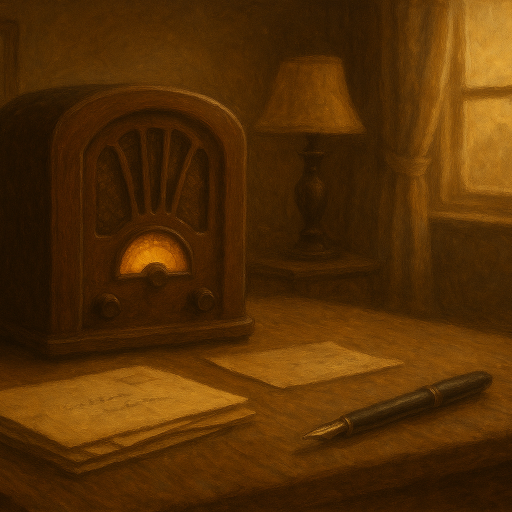
As World War II ended and America embraced a new era, radio reigned supreme as the dominant form of home entertainment. It was a natural fit for Sam Spade, whose gritty dialogue and atmospheric world could be vividly conjured through sound alone. “The Adventures of Sam Spade” hit the airwaves in 1946, translating the hard-boiled style to an auditory medium with remarkable success.
The show, known for its clever plots, witty banter, and the ever-present, exasperated voice of Spade’s secretary, Effie Perine, became immensely popular. Listeners tuned in eagerly to hear the latest case of the San Francisco private investigator, often getting a glimpse into Spade’s more human side through his interactions with Effie. The show’s success owed much to its distinctive lead, the actor who gave Spade a voice that resonated across millions of American homes: Howard Duff.

Duff’s portrayal was pitch-perfect. He imbued Spade with a cool confidence, a hint of weary sarcasm, and a charm that made the character incredibly appealing, even when he was at his most detached.
But there was another significant detail about Howard Duff: he was a World War II veteran, having served in the Army Air Corps in the Marianas Islands before being assigned to the Armed Forces Radio Service (AFRS). His work boosted morale and brought a piece of home to soldiers scattered across the globe. This service made him, in many ways, an ideal voice for a character who, despite his flaws, always pursued his own brand of justice.
Cultural Saturation: Imitation, Homage, and Parody
By the late 1940s, Sam Spade wasn’t just a character; he was a phenomenon. His influence permeated popular culture, shaping how detectives were written, portrayed, and even lampooned for decades to come.
The direct lineage is clear: countless hard-boiled detectives, from Raymond Chandler’s Philip Marlowe to Mickey Spillane’s Mike Hammer, owed a significant debt to Spade’s pioneering archetype. They adopted his hardened worldview, his tough-guy demeanor, and his knack for landing in trouble.
But perhaps the greatest testament to Spade’s iconic status was the sheer volume of parodies he inspired. When a character becomes so universally recognized that merely hinting at their appearance or mannerisms can elicit a laugh, you know they’ve achieved true cultural saturation.

Cartoons like Looney Tunes or Tom and Jerry would often feature characters in trench coats and fedoras, muttering hard-boiled lines, a visual shorthand that audiences immediately understood as a nod to Spade and the film noir aesthetic. Comedies, both on screen and radio, gleefully played with the tropes Spade helped popularize–the femme fatale, the double-cross, the jaded voiceover packed with metaphor–proving just how deeply embedded the detective’s image was in the American imagination.

The Shadow of the Red Scare: Howard Duff and the Blacklist
As Sam Spade flourished in popular culture, a wave of paranoia swept across America. The Cold War was escalating, and fears of communist infiltration led to an era of intense anti-subversive hysteria known as the Red Scare or McCarthyism. The House Un-American Activities Committee (HUAC) launched aggressive investigations, and merely being accused of communist sympathies, often without evidence, could destroy lives and careers.
In this climate of fear, even beloved figures in entertainment became targets. Howard Duff, the voice of Sam Spade, found himself caught in the crosshairs. Accusations of “left-wing” affiliations, often stemming from vague associations or informers, began to circulate. The irony was alarming: a World War II veteran, who had dedicated his wartime service to entertaining his fellow soldiers, was now being painted as “un-American.”

The direct impact on “The Adventures of Sam Spade” was severe. Though the show initially tried to weather the storm, the pressure was immense. By 1950, Howard Duff was no longer the voice of Sam Spade, replaced by Steve Dunne. The show itself limped on for a short time but eventually succumbed to the climate of suspicion and changing network priorities, ending in 1951.
For Duff, the personal cost was significant. While he wasn’t as completely blacklisted as some others (he found work in B-movies and later successfully transitioned to television in the late 1950s and beyond), his career was undoubtedly hampered during the darkest years of the blacklist. He faced scrutiny, lost opportunities, and endured the suspicion that tainted so many lives during that era. It was a case study in how deeply the tendrils of political paranoia could reach, even into the seemingly innocuous world of entertainment.
Sam Spade’s journey is emblematic of America’s own cultural evolution. From Dashiell Hammett’s revolutionary pen, he rose to iconic status through Humphrey Bogart’s definitive cinematic portrayal and Howard Duff’s captivating radio voice. He defined a genre, inspired countless imitations, and became a shorthand for the cynical, street-smart detective.
But the story of Sam Spade also serves as a reminder of a darker period. The fact that the voice of this quintessential American tough guy, a man who had served his country with honor, became a victim of the Red Scare is a dismaying irony. It is an example of the destructive power of fear and the arbitrary nature of accusations that could silence voices and derail careers.
Sam Spade, the fictional character, remains timeless, thanks to enduring storytelling. But woven into his rich legacy is the very real, and often tragic, story of the people who brought him to life, and the complex, sometimes contradictory, history of the nation that embraced him. He is more than just a detective; he is a reflection of America itself, in all its gritty glory and ambiguity.






Leave a Reply