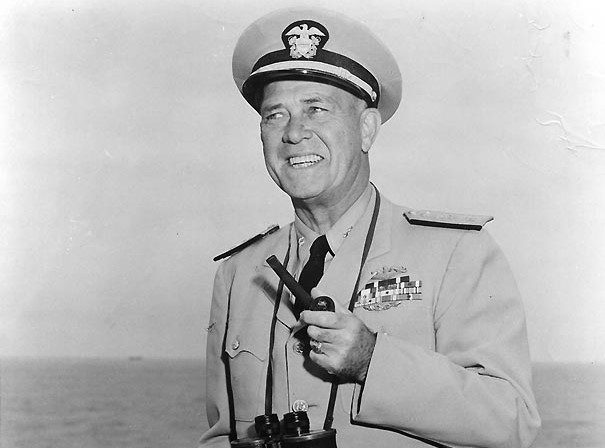
Every organization has one person who gets called when something has gone catastrophically wrong. The Navy’s version of that person, for much of the twentieth century, was a man named Charles “Swede” Momsen.
I didn’t have to write the story, because our friends at Commonplace Fun Facts did, and they did it better than I would have.
Momsen commanded ships above and below the surface of the ocean. He built the equipment that let trapped submariners escape a sinking hull, then tested it on himself, at real depth, because sending someone else down first apparently never crossed his mind.
He proposed a rescue chamber that could reach men trapped on the ocean floor. The Navy rejected the idea as impractical. Two submarine disasters and dozens of dead sailors later, the Navy built it anyway.
Then came the torpedoes. American submarines went to war carrying weapons that ran too deep, exploded too early, or struck their targets and did nothing at all. The Bureau of Ordnance insisted, for the better part of two years, that the problem was the men firing them. Momsen was the one sent to prove otherwise, and he did it the same way he did everything else: by getting in the water himself.
The eventual fix came from an unlikely source: salvaged engine metal from Japanese aircraft downed at Pearl Harbor, light and strong enough to rebuild the torpedo’s failing firing pin, with scrapped propellers from Hickam Field filling in once that first supply ran short.
This is a story about a man the history books mostly skipped over, and a bureaucracy that took far too long to admit he’d been right the whole time. I encourage you to read on!





Leave a Reply