
In the 1930s, the world was a very different place.
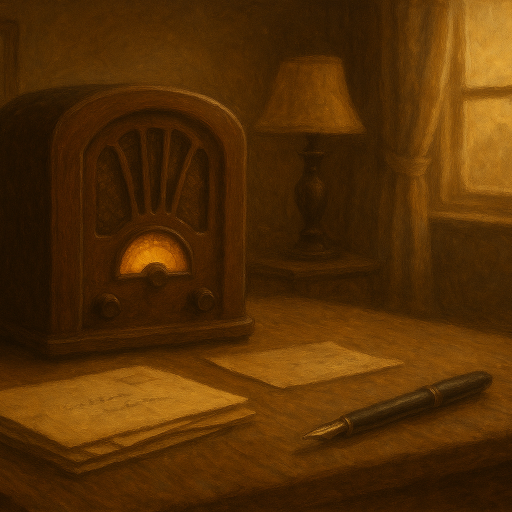
Families gathered around a wooden box with a dial, not a screen. The radio was the internet of its day, a device that could bring comedy, music, and dramatic stories into the living room, connecting millions of Americans to a shared culture.
It was the golden age of radio, but for one of the nation’s biggest companies, it was also the last hope for redemption.
The DuPont company, a massive chemical and industrial company, had a serious image problem. Following World War I, the company was widely accused of profiting from bloodshed, a label that earned them the notorious nickname “the merchants of death.”
This reputation was not just a passing headline; it was cemented in the public mind by the Nye Committee, a Senate investigation that publicly linked munitions manufacturers to the war.

The crisis was real, and DuPont desperately needed to change the narrative.
They couldn’t simply run an ad campaign about a new type of paint or a stronger fabric. Their reputation was on the line, and they needed to do something impactful, something that would not just sell a product, but a new idea of who they were.
The solution was brilliant: a radio show. But not a typical show. Instead of an adventure serial or a family comedy, DuPont would produce The Cavalcade of America, a weekly historical anthology that dramatized stories of invention, discovery, technology, and civic virtue.
It was a show that was meant to be educational, inspiring, and above all, deeply American. It was a radical idea that went beyond simple advertising. It was about creating a cultural footprint that would reshape the company’s identity from the ground up.

The Stories That Shaped a Nation
Every Monday night, Cavalcade of America invited listeners to step back in time. The program’s episodes largely focused on the unsung heroes of American history, the inventors and explorers who pushed the boundaries of human knowledge and progress.
From the struggles of Eli Whitney to the life of legendary folklorist John Lomax, the show celebrated a large cast of characters who embodied the spirit of innovation and sacrifice.
In an era dominated by escapist entertainment—the melodramatic cries of soap operas and the hard-boiled dialogue of crime thrillers—Cavalcade of America offered something different.
The show treated history with dignity and respect. The stories were created to be uplifting and optimistic, with themes that celebrated patriotism and the pursuit of knowledge. It was entertainment with a purpose, and audiences responded enthusiastically.
This approach was not accidental. Each episode was carefully chosen to reflect the values DuPont wanted to be associated with. The story of Jonas Salk, for example, and his discovery of the polio vaccine, was a natural fit.
It was a story of a scientist using his intellect to fight disease, a narrative that perfectly mirrored the company’s new public slogan: “Better things for better living…through chemistry.”
The show became a living, breathing history lesson, teaching civic responsibility through the lives of those who had made the country what it was.
Fact-Checking the Frontier
In order to put more distance between themselves and the ‘war profiteer’ label, DuPont sought the ultimate shield: academic legitimacy. They employed a board of prominent historians and educators to consult on every script.
This ended up being a strategic masterstroke. By guaranteeing the historical accuracy of an episode about Benjamin Franklin or Clara Barton, they effectively borrowed the accuracy and integrity of the history they were telling.
If the history was true, the audience thought, then the sponsor must be trustworthy. This commitment to accuracy made Cavalcade of America a staple in classrooms across the country. Teachers would often assign the evening broadcasts as homework, and DuPont happily provided study guides and supplemental materials to schools.
This also allowed the brand to bypass the skepticism of adults and speak directly to the next generation of consumers, weaving the DuPont name into the fabric of American education.
The Talent That Made It Shine
A show with such a lofty mission needed serious talent to pull it off. In the age of radio, voice was everything, and DuPont spared no expense in hiring the best. Hollywood’s biggest stars were a common presence on the show.
Listeners tuning in might hear the powerful tones of Orson Welles, the distinct voice of Humphrey Bogart, or the elegant delivery of stage legend Helen Hayes. The roster of guest stars read like a who’s who of Hollywood’s Golden Age, including Lionel Barrymore, James Stewart, Bette Davis, Robert Young, and a host of other A-list actors.
This was a key part of the show’s genius. The presence of these actors lent an air of prestige and artistic credibility that no simple ad campaign could ever achieve. These performers were not just hawking a product; they were participating in what was seen as a high-quality, culturally significant production.

For actors who were often typecast in film, Cavalcade of America offered a different kind of platform, a chance to play historical figures and engage with more serious material. This mutual benefit created a virtuous cycle: the show’s quality attracted top talent, and the top talent further elevated the show’s reputation.
Arthur Miller and the Writers’ Room
It wasn’t just the voices in front of the microphone that brought prestige. Before he became a giant of American theater, a young Arthur Miller cut his teeth writing scripts for Cavalcade. The show provided a successful training ground for writers who would go on to be the faces of 20th-century storytelling.
Make no mistake, these writers were tasked with a difficult challenge: they had to produce “propaganda” that didn’t feel like propaganda. They focused on “The American Way”; a term that Cavalcade helped popularize.
By focusing on the struggle of the individual against the elements or ignorance, the writers created a narrative where progress was always the hero.
This high-caliber writing ensured that the show never felt like a lecture; it was akin to an entertaining premiere, making the association with DuPont seem like a badge of cultural sophistication for the audience.
A Revolution in Public Relations
The underlying brilliance of Cavalcade of America was in how it handled its corporate sponsorship. Most radio shows of the time were loud and direct in their advertising, with loud jingles and exaggerated calls to action.
Not with DuPont. Their commercials were almost a part of the show. They were subtle segments that described the company’s contributions to American life, like the development of rayon or nylon for clothing.
An announcer might come on and, in a calm voice, connect the historical event just dramatized to a modern innovation. For instance, after an episode about pioneers crossing the plains, the announcer might explain how DuPont chemistry created better materials for tires, making travel safer and more efficient.
The commercials were confident arguments for the company’s place in society. The slogan, “Better things for better living…through chemistry,” was not just an ad pitch; it was the thesis of the entire campaign, the idea that DuPont’s work was an indispensable driver and developer of American progress.
It may sound silly today, but this soft-sell approach was revolutionary. Instead of asking listeners to buy something, it asked them to believe in something: that science and industry, embodied by DuPont, were forces for good. It wasn’t about a single product; it was about the company as a whole.
And it worked. Over the course of the show’s long run, DuPont’s public image was gradually rehabilitated, and the company became associated with education, innovation, technology, and public benefit.
While the soft sell appeared seamless to the listener, it was the result of a rigorous internal vetting process. DuPont didn’t just want to be liked; they wanted to be perceived as essential to the American future. To achieve this, the company established a “Radio Committee” that worked closely with the advertising agency BBDO. This committee acted as a bridge between the laboratory and the recording studio.
The key was the transition. They changed how chemistry and industry was thought of. It was now seen as a vital partner in the American home instead of a distant process.
By linking the rugged individualism of the 1700s, for instance, to the scientific innovations of the 1930s, DuPont suggested that the chemist was simply the modern version of the pioneer.
They weren’t just selling nylon; they were selling the idea that DuPont was the architect of the next American frontier.

WWII And The War Economy
The ultimate test for Cavalcade of America came with the dawn of World War II. For a company once branded “merchants of death,” the return to a wartime economy was a public relations minefield.
However, because of the goodwill built by the show since 1935, DuPont was able to frame its military contributions in an entirely new light.
Instead of being seen as profiting from conflict, DuPont used Cavalcade to highlight how their chemical breakthroughs, like neoprene and specialized plastics, were “protecting American boys” overseas. The show adjusted its focus toward the “Home Front” and the “Production Front,” and made a point to show that the war was being won in the laboratories as much as on the battlefields.
By the time the war ended, the transformation was complete. DuPont was no longer the shadowy munitions maker of WWI, but the scientific powerhouse that had helped save democracy.
A Lasting Influence
The show’s impact extends far beyond its time on the air. Cavalcade of America was a true pioneer, a blueprint for what we now call branded content. It demonstrated that a company could build an audience and a brand by creating the programming, instead of interrupting it. This model is everywhere today, from branded podcasts to corporate-sponsored documentaries and YouTube series.
The show also helped set a template for “edutainment,” and showed that historical content could be both educational and engaging. The approach can be seen in later historical documentary series like American Experience, which uses the same sense of reverence for history and narrative storytelling.
The show eventually made the jump to television in 1952, where it continued for several more years. The format had to adapt to the visual medium, but the core idea remained the same.

Today, as brands attempt to navigate the landscape of social media and online content, the lessons of Cavalcade of America are as relevant as ever. It’s also a lesson, and evidence, that entertainment, history, cultural, and business interests have been intertwined for a long time.
The next time you listen to a corporate-sponsored podcast or watch a brand-created video, remember that it has an ancestor: a groundbreaking radio show created by a chemical company trying to prove it was a force for good.
Ultimately, Cavalcade of America was more than a radio program; it was a decades-long exercise in corporate involvement in public life. DuPont hit on something that many modern companies still struggle with: people don’t want a salesman; they want a storyteller.
The company’s journey from “Merchants of Death” to the providers of “Better Things for Better Living” may be the definitive case study in reputation management. Products are bought with currency, but brand longevity and loyalty only comes with trust.
By attaching its name to the legends of the past, DuPont bought a seat at the table of the American future. It turns out that a “merchant of death” can eventually become an essential partner in progress, provided they have the right script and a prime-time slot.




Leave a Reply