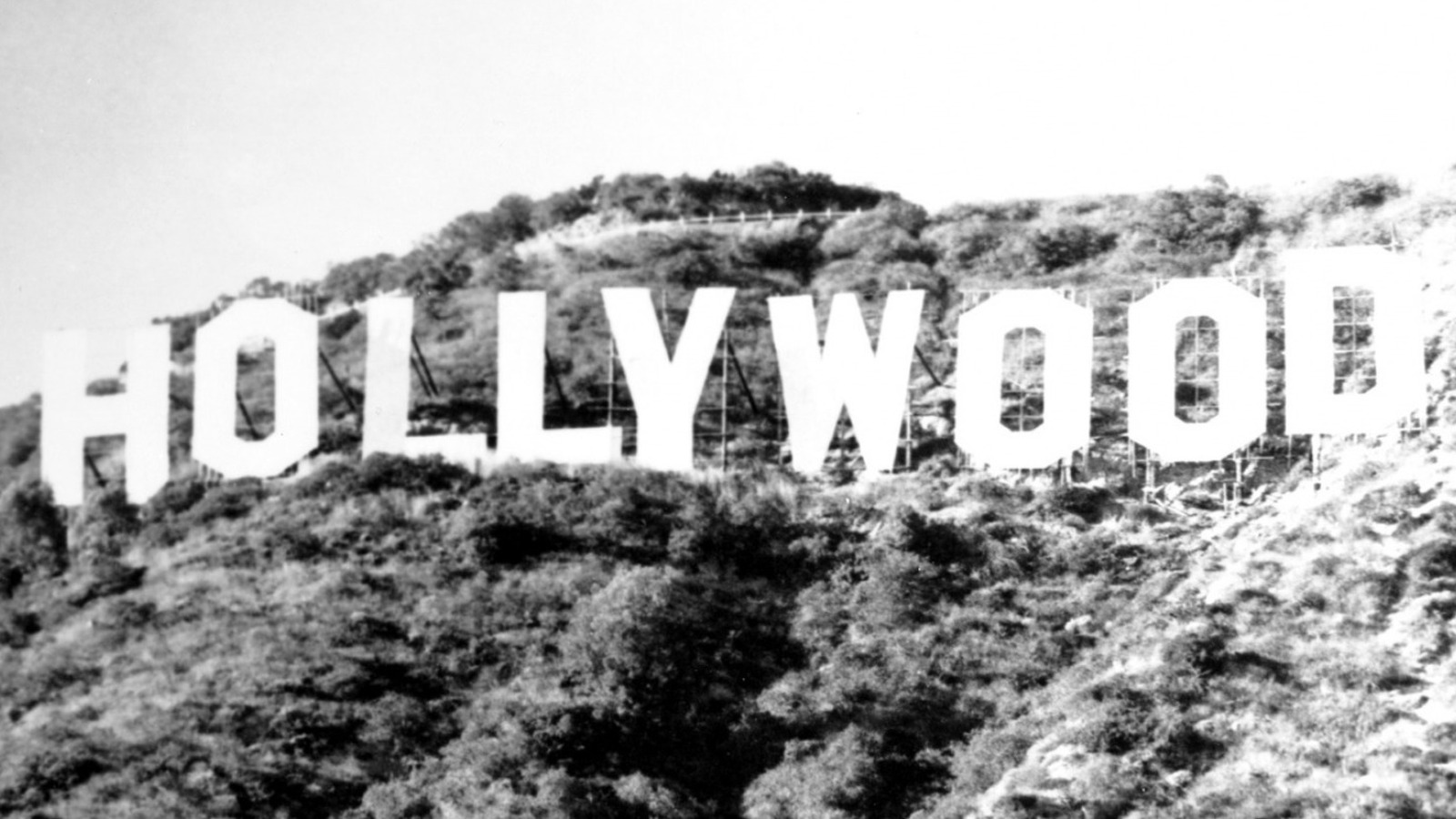
In 1947, 1948, and every year thereafter, the city of Los Angeles kept up appearances, selling the same dream of infinite possibility it always had. Behind the scenes, however, the studio moguls were losing their nerve. The glossy perfection of their films had become a mask for a much uglier reality: they were running out of time, and they knew it.
In the fall of 1949, the clock was ready to stop. The problem was an industry-wide, organized strike involving the carpenters, painters, the set dressers, and a powerful wing of the Teamsters.
The various craft unions had been maneuvering for months, consolidating their demands into a package the studios considered a deal-breaker. For executives at MGM, Paramount, and Warner Bros., this was not a simple labor negotiation; they were looking at the end of the studio system as they knew it.
The stakes were massive: if the cameras stopped, the money stopped. Every week of a shutdown meant millions lost while actors on guaranteed contracts got paid to sit at home. Expensive sets would just collect dust on the soundstages.
It wasn’t just a budget issue; it was a threat to the entire house of cards that kept the studios financed. Worst of all, a long strike would let the national press peek behind the curtain, showing the world just how ugly the business of show business really was.
The media was camped out, ready for the shouting, threats, altercations, the inevitable acrimony of a public war between capital and labor. The deadline passed.
And then, nothing happened.
The strike, which had been presented with such absolute certainty, simply evaporated. The pickets that had been planned for the main gates never materialized. Union leadership, which had been belligerent and public in its demands, were suddenly unavailable for comment. The studio executives, who had been huddling in panic, exhaled a collective sigh of relief and, well, went back to filming.
There was no announcement of an agreement. There was no public concession, no triumphant handshake for the newsreels, and no named negotiator to take credit for the incredible feat of diplomacy. The crisis that should have been the biggest news story of the year simply disappeared.
This unexpected calm was the first real look at how postwar Hollywood actually worked. The industry’s ability to churn out movies relied on men whose power was so total they didn’t need to shout to be heard.
You didn’t see their names in the newspapers or their faces in the trades. The “dream factory” wasn’t held together by art; it was held together by men with invisible control. The system was rigged so perfectly that you only noticed the puppet masters when a massive crisis suddenly vanished.
Hollywood After the War
Sidney Korshak was a necessity born from the business reality of post-war Hollywood: the studios had never been richer, and never more terrified. By 1946, American films dominated the globe, but the studios were hostage to their own scale.
These were giant, fixed-cost machines that relied on deadlines. You couldn’t tell a director to wait while two unions argued over who got to hammer a nail. Every hour of delay triggered an avalanche of overtime and wasted budget.
With the kind of overhead these studio lots carried, smooth operation wasn’t a goal; it was the only thing standing between a record profit and a total collapse.
This fragility encountered the growing strength of organized labor in the postwar period. During the war, unions were largely cooperative, focused on the national cause. Once peace was secured, that wartime solidarity turned into postwar leverage.
The craft unions, the electricians, the carpenters, the plumbers, the projectionists who ensured the finished product reached the theaters, knew exactly how indispensable they were. They learned that the most effective tool in their arsenal was not just the power to strike, but the power to create disorder and delays. A strike was no longer about incremental wage increases; it could be a matter of life and death for the studios.
The executives’ greatest fear was not simply the financial hit of a strike, but the public exposure it represented. Hollywood’s product was illusion, the creation of glamorous perfection.
A strike was high visibility imperfection. It meant shouting workers at the gates, accusations of corporate greed plastered across the papers, and the complete loss of control over their own narrative. It would reveal the brutal, unromantic machinery of the business.
The Kind of Man Hollywood Needed
The executives who ran postwar Hollywood, despite their money and influence, found themselves trapped. They needed a fixer who could communicate across a massivee valley: from the executive boardrooms of Burbank and Century City to the smoky back rooms where union power, often intertwined with organized crime, was wielded.
The man they required had to possess an incredibly unique, and contradictory, set of qualifications.
First and foremost, he needed to be a genuinely sophisticated legal mind. He had to be able to read and construct contracts, cite labor statutes, engage with other attorneys and officials, and advise a powerful studio lawyer without a hint of hesitation.
This was important for gaining the trust of the corporate side, and ensuring that any back-channel deal could be drafted and disguised with the appearance of absolute legitimacy. He needed to speak the language of litigation and fiduciary responsibility.
But this knowledge was just a starting point. To be effective, he also needed to be fluent in a second language: intimidation. When he spoke to a union boss, that boss needed to hear not just the lawyer’s voice, but the implied authority of a powerful organization standing silently behind him.
He needed a network that included figures who were completely trusted in the highest echelons of organized crime, but he could not be one of them himself. He had to be an elevated intermediary with the ability to carry authority from legitimate business to, well, less legitimate ones.
The man the studios desperately needed had to be respectable enough to receive calls from major producers and company presidents, and trusted enough by those who controlled the trucking, the concessions, and the key construction trades to broker a peace that actually held.
He could not be a public figure, because fame and attention would attract the wrong kind of scrutiny, and destroy his deniability. He could not be an executive, because executives are legally accountable and traceable.
He needed to be a professional ghost, a specialist in keeping his hands clean, despite being close to a dirty kind of work. When the crisis that should have happened suddenly didn’t, it was this kind of man, the one who never appeared, who had orchestrated the quiet miracle. The industry needed a lawyer who was also an essential back-channel to the organizations that could affect their studios. That man was Sidney Korshak.
Chicago: Where Korshak Learned the Language of Power
Sidney Korshak’s extraordinary ability to influence was not a creation of the image-obsessed world of Hollywood. It was developed in the urban machine of Chicago during the decades following Prohibition. If Hollywood taught the world how to create an illusion, Chicago taught Korshak how to manage the reality of power that operates beneath and around the law.
Chicago in the 1930s was a laboratory for combining the illicit with the legal. Organized crime was not some shadowy, external entity; it was an embedded fixture in civic life, controlling key unions, influencing political and legal decisions, and running profitable businesses alongside legitimate ones.

The boundaries between the city’s government, its law firms, and organized crime were fluid, constantly shifting, and often shared the same personnel. This was the type of environment where Korshak spent his formative years.
He attended law school at DePaul University. But for Korshak, law was not a moral philosophy; it was a highly adaptable tool. It taught him the art of negotiation, the strategic use of loopholes, and the necessity of documentation designed for plausible deniability. His legal education was a way to convert the power of the street into the sophisticated, respectable language of business.
His early proximity to the Chicago Outfit had broadened his field of view. He gravitated to the financial and legal strategists, instead of gunmen and racketeers. Korshak became their crucial point man: a legal counsel, a planner, an intermediary, and a translator.
He took the often crude demands of criminal figures and turned them into business-speak that could be presented to a bank or a corporate lawyer. His work involved fixing municipal problems, handling labor disputes that benefited his clients, and ensuring the syndicate’s assets remained legally shielded.
Sidney Korshak came away with one central lesson learned from his time in Chicago: humility in the exercise of power. Korshak learned early that the most effective and powerful men are often not the ones who stand on a soapbox or make bombastic demands.
The true architects of control are the ones who work through proxies, who manage coordination, and who ensure that their involvement is never the subject of a headline. To Korshak, visibility was a major operational failure; silence was the ultimate sign of success.
Chicago taught Korshak that control was less about about issuing a command, and more about arranging circumstances so that the desired outcome becomes inevitable. When he looked west toward the film industry, he saw an enterprise that was already perfectly structured for his kind of influence.

Westward: Organized Crime Follows the Money
The decision to move operations, or at least to expand them, from Chicago to Los Angeles was a matter of following the largest pool of capital and the easiest targets of opportunity.
The postwar economic boom funneled staggering sums into the film industry, the expanding real estate sector, and the budding resort towns like Las Vegas. Where the money was flowing, the forces of organized crime needed a legal conduit, a man who could ensure their investments and interests were protected and made profitable.
Southern California was a wide-open market. It didn’t have the deep-rooted political walls of Chicago or New York; it was just a sprawl of new money and new institutions. The city was too focused on its own image to defend itself.
Since Hollywood’s value lived and died on the “perfection” of its product, the studios were an easy mark. Executives didn’t want a fair fight or a public investigation; they wanted a quiet solution. Korshak didn’t have to hide—the industry’s own vanity provided all the cover he needed.
Korshak didn’t blow into town with a brass band. He just appeared where he was needed. He showed up because a studio boss couldn’t get his trucks moving, or a lawyer needed a back-channel to the Outfit, or a Vegas casino developer needed a labor headache to go away. He was more than a lawyer; he was the lubricant.
He was the only man who could sit in a room with a mobster, a mogul, and a Teamster and make sure they all got what they wanted without killing each other.
Almost overnight, Korshak became the connection between the executive suites and the backrooms. He was the proof that Chicago’s influence was now a permanent fixture in California. He was the man with the “magic” phone line. Whether it was killing a political investigation or smoothing out a union headache, Korshak made it happen.
The studios didn’t just accept him; they embraced him. They found that his particular brand of “help” was the only thing that guaranteed they could keep making movies without the constant fear of the machinery seizing up.

Leverage, and the Art of Making Problems Disappear
Korshak’s power didn’t come from a law book or a gun. It came from being the guy everyone had to talk to. He was a high-stakes bridge-builder who knew exactly how much leverage to apply to keep everything, and everyone, moving.
He didn’t give orders; he managed egos until everyone “volunteered” for the deal he’d already cut. He stayed away from the public bargaining tables. Instead, he worked the phones, balancing the union’s need for a win, the studio’s fear of a scandal, and the Mob’s demand for a piece of the action. He was the only one who knew everyone’s price.
Korshak had no interest in Hollywood’s drama; he needed results. He’d spend days quietly outlining the price of a fight to everyone involved. By the time a strike vote was even called, the outcome was already a done deal.
His genius was that he never had to make a threat; he just presented the facts—carefully backed by the weight of his Chicago friends—until the studio and the union both realized that his way was the only way out. He didn’t force a decision. He just made the alternatives look like suicide.
The studio heads relied on Korshak for one reason: he never failed. He kept the dirty laundry out of the press and the schedules on track. More than anything, he kept the film running through the gate.
It wasn’t brute force; it was a masterclass in knowing everyone’s price. He didn’t want a trophy or a headline. He knew that in his business, the only thing better than winning was never having to fight at all.
Watched, Recorded, and Never Touched
For decades, Sidney Korshak was the FBI’s biggest frustration: the most watched man in America who never wore handcuffs. His file at the Bureau nearly needed its own library.
It was a massive file of activities, names, dates, and wiretap transcripts that never added up to an indictment. Hoover’s men knew exactly who he was—the bridge between the Fortune 500 and the Chicago Outfit. They could see the connection, but they couldn’t break it.
The FBI tracked his flights, tapped phone lines, followed him, and took photos of him dining with studio heads and Outfit triggermen. Senate committees dragged his name into the records of labor racketeering hearings. He was subpoenaed and grilled in Congressional inquiries, with investigators trying to map out exactly how he moved money and favors across the country.
But, try as they might, the paperwork never turned into a charge. No matter how high the mountain of memos grew, they couldn’t find a single crime with his signature on it. He stayed out of the violence and away from the ledgers, leaving the feds with a lot of suspicion and zero evidence.
Korshak lived in the middle ground between what everyone knew and what a prosecutor could prove. His operation was built on plausible deniability. He never gave an order; he merely offered “persuasive arguments.”
He ensured every dollar that reached Chicago was wrapped in a legitimate business commission or a legal retainer. To the feds, he was a paradox: a man who commanded the underworld without ever committing a prosecutable act. He didn’t hide from the law; he used the law as a shield.

Hollywood’s Unspoken Agreement
Sidney Korshak stayed on top for decades because Hollywood’s elite wanted it that way. To them, this wasn’t a complex moral dilemma; it was a business deal. The studio heads looked at the alternatives—picket lines, controversy, empty theaters, and government investigators poking into their books—and decided they’d rather pay for peace, rigged though it was.
Every time a mogul or a banker took a meeting with Korshak, they were making a choice. They knew who he was and who he represented. But to them, a strike that cost millions was a catastrophe, while a backroom payoff was just a line item.
They didn’t care about running a “clean” industry. They cared about the value and the prestige of the studio, and they were more than happy to use a guy like Korshak to keep the mess off the front page.
Korshak didn’t bring corruption to Hollywood; he just provided the service the studios were already looking for. He was a tool they used to keep the business running without the headaches of strikes or public fights. To the men in charge, a “managed” problem was always better than an honest disaster.
By keeping the unions quiet and the politicians happy, Korshak gave the studios exactly what they wanted: a way to pretend everything was perfect. The executives told themselves that a little corruption was a small price to pay to keep the cameras moving. They wanted the money to keep coming in, and they didn’t want anything—unions, reporters, Congressional committees, the FBI, or the truth—to stop it.
This was the new rule of Hollywood: growth mattered more than anything else. If a “necessary evil” like Korshak was what it took to keep studio profits coming in, they were happy to look the other way. In their eyes, the only real sin was stopping the production.
The Man In the Shadows
Sidney Korshak’s biggest trick was staying invisible. In a town like Hollywood, where everyone lived to be noticed, he worked to stay out of sight. He didn’t do interviews and he didn’t pose for photos. This wasn’t just a habit; it was something he’d learned back in Chicago: if nobody sees you, nobody can pin anything on you.
While stars like Frank Sinatra or Elizabeth Taylor were busy staying in the headlines, Korshak was busy staying out of them. He made sure his name only showed up in private memos and FBI files. He knew that in his line of work, being famous was a weakness. If the public didn’t know who you were, they couldn’t demand you be held responsible for what you did.
Korshak’s real impact is hard to track because his job was to make things disappear. It’s the classic problem, how do you prove a negative? You can’t point to a signed contract or an official title.
For Sidney Korshak, you have to look at the problems that never happened. His power was in the strikes that ended before they started, the mob deals nobody knew about, the corporate deals everyone denied, and the scandals that never hit the papers. He made sure the studio system looked perfect to the public, mostly by hiding the dirty work required to keep it running.
History remembers the famous moguls and the big stars, but the industry’s most stable years happened because of a man nobody could quite pin down. Korshak didn’t want the spotlight. He spent his entire career in the shadows, making sure that while the cameras were rolling, the real business stayed off the record.

The irony is that while everyone remembers Hollywood for the faces on the screen, the industry only stayed upright because of men like Sidney Korshak. The stars got the credit, but the fixers did the heavy lifting. Korshak spent fifty years making sure the world only saw what it was supposed to see. He stayed out of the picture, but without him, the whole thing would have collapsed.
Korshak wasn’t a one-off fluke. He was just the best at a game that plenty of other people were playing. For every movie that finished on time, there were dozens of quiet deals and phone calls happening in the background.
He was at the top of the heap, but he wasn’t alone. He was surrounded by a whole army of fixers: lawyers who buried scandals, union guys who kept the workers in line, and city officials who made sure the permits always went through. Korshak’s method—using a law degree to wrap a mob threat in a business suit—wasn’t a secret anomaly. It was just how Hollywood did business.
Sidney Korshak was just one man, but his career exposed Hollywood’s biggest secret: the movies were an illusion, but so was the way they were made. Hollywood was built on backroom handshakes, and the man who kept the whole thing from falling apart was the one nobody was allowed to notice.






Leave a Reply